Alarm Cocks

We know a few folks back at home who either are keeping or have kept chickens. For basically urban folks, it seems a slightly odd decision to me, perhaps because several weeks frequently pass without our using a single egg and/or because I could never manually dispose of a chicken that had reached the end of its “useful” life. In  my situation, a trip to Waitrose for the occasional half dozen eggs or oven-ready free ranger suffices admirably.

One doesn’t have to travel far from French towns before much of life switches into the slow lane and becomes decidedly rural, though. Witness all the large plots of land in the Marais Poitevin given over to vegetable production; plots of land that require significant investment in domestic versions of industrial irrigation equipment (petrol-driven water pumps and canons) and rotivators to obviate the need for back-breaking digging work. Those folks must be self-sufficient vegetable-wise which, I’ve just thought, may go some way to explaining the lack of street markets in that area.

There’s another manifestation here just outside Réalmont. The chicken-keeping habit is rife in rural France where, at about 6:00 AM this morning, I was awoken by several alarm cocks going off. From the variously strangled tones and relative volumes, I lay trying to count the individuals and came to the conclusion that probably four were involved in our local, less than tuneful addition to the dawn chorus. I’ve never thought of it before but I see now that Cockerels crowing really is a part of the dawn chorus. I just about heard a Blackcap singing together with a Golden Oriole trying to whistle its short but melodious tune from a nearby poplar tree but the combined cockerel cacophony [Ed: how’s that for alliteration?] had them both licked.

And while we’re at it, why does our language say that Cockerels crow? We have a bird called a Crow which surely should be said to crow, if anything does, but Crows caw. What a curious thing language is. Just a thought.

Technorati Tags: ,,
Posted in 2011 Spring Tagged with: , ,

Fin de la Sécheresse?

Sécheresse nf dryness; drought.

A new French word this year for us. Near the beginning of our trip up in Luché-Pringé, France was already suffering from a lack of water. Two glorious weeks later, things were getting worse and the drought had spread to most of the French departements. It looks as though it may have come to an end. We’ve faired quite well in Figeac at which we were frequently surrounded by threatening clouds whilst enjoying a good amount of sunshine ourselves. We began referring to “the Figeac hole in the clouds”. Doubtless, it was just coincidence, though. Then, in what seemed like a dismal repeat of last June, we heard that poor old Draguignan in Provence had once again suffered floods. June seems to be becoming a bad time to visit Provence.

Today we travelled about 120kms/80mls from Figeac to Réalmont, half way between Albi and Castres. With the skies darkening all the time, we were frequently driving through light rain. Since arriving at 2:00 PM, it has been raining steadily and almost continuously. Along with the now unsettled weather in the mountain regions, I’d say the French water stocks will be being topped up.

Nobody really wants a drought and this is the first day of rain that we’ve had in 3½ weeks so we can’t complain. It’s amazing, though, how quickly rain gets very old and tiresome when one enjoys an outdoor lifestyle. On a day as dismal as this, I have been very grateful that I was not in a tent. I remember rain and canvas being an unpleasant combination. Even with an out of commission water system, Guillaume is relatively comfortable, especially now that we have re-pitched with no overhanging trees.  Basic camping rule: trees continue to drip on roofs and are bad news when trying to sleep. Duh!

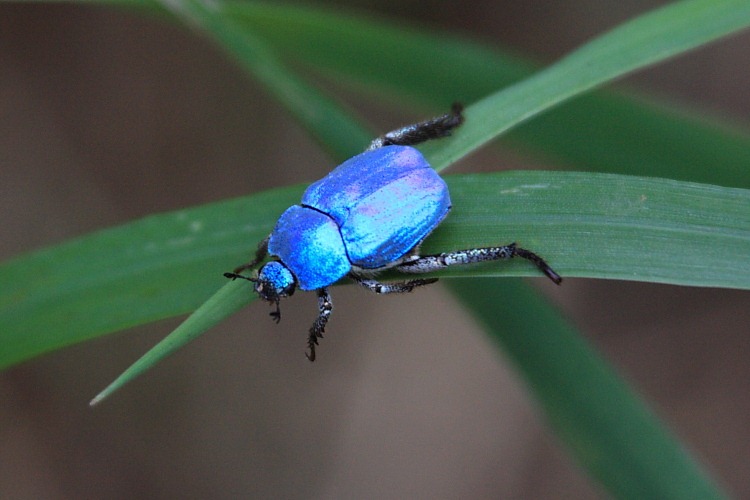
IMG_0161_Hoplia_caerulea Since nothing much has happened today other than a journey that felt tiring over twisting, hilly, bumpy roads largely in rain, here is a little gem that we spotted lurking about in the grass on our recent tour of the Célé valley. I use the word “gem” advisedly. There is no plain English term for this spectacular character who, I believe, rejoices in the scientific name of Hoplia caerulea. He is a member of the scarab/cockchafer family but my book leaves me unclear whether he is a scarab or a cockchafer. As I recall, the Egyptians were quite fond of scarabs and, given the stunning blue colour of this character, I can see why. Jewels pale into insignificance.

With my tourist hat on, I hope it stops raining overnight.

Posted in 2011 Spring Tagged with: , , , ,

Not a Lot

Since we’ve found ourselves a comfortable campsite in an area that has a few things to investigate, we’ve decided to stay for another couple of nights to see out the manic four day weekend. Also, the slightly disturbing weather maps in Aujourd’hui (our French newspaper) indicate that we have a period of inverted weather whereby the south of France fares worse than the north so, for the moment at least, there seems little point going further down.

Figeac lies on the river Célé. Flowing roughly south west from Figeac through the vallée de la Célé, it eventually flows into the better known river Lot which, in turn, flows through Cahors. In a previous existence, we’d spent a little time investigating the Lot vallye and, other than St. Circq-Lapopie, had wondered why. In this life time, led by the Rough Guide on Francine’s technologically advanced Kindle, we set off to investigate the vallée de la Célé before our forecast rain arrived.

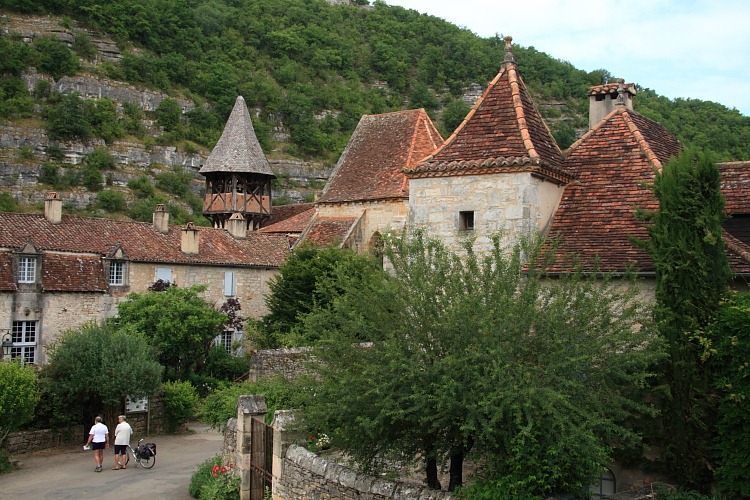
IMG_0678_Espagnac-Sainte-Eulalie First stop was the hamlet of Espagnac Sainte Eulalie where there were two surprising things. The first was mentioned in The Rough Guide: “an octagonal lantern crowning the belfry of the church”. The second, not pictured and definitely not in The Rough Guide, was an improbably large French motor caravan which had somehow been driven through the narrow street (there was only one) into the diminutive square of the hamlet where it had been “parked” across a 10% slope at a sea-faring angle healing over to starboard, with its back end blocking half the square.

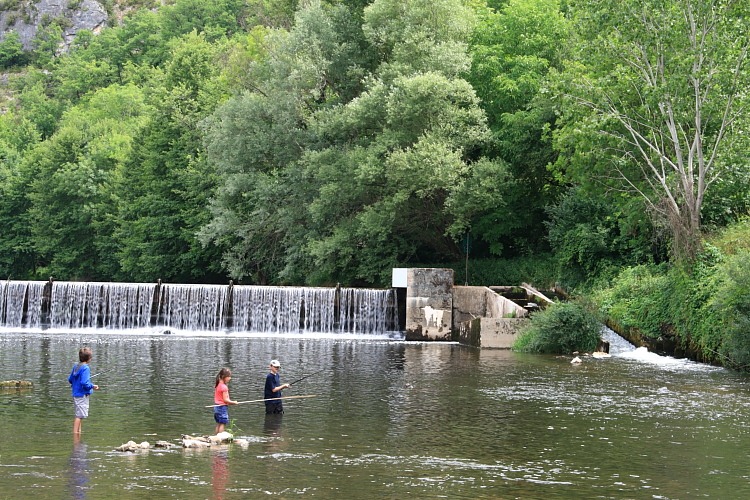
IMG_0697_Marcilhac-sur-Cele IMG_0705_Marcilhac Marcilhac-sur-Célé, our next stop, provided a picturesque photo opportunity against the side of the valley together with a much more endearing French scene: three children fishing knee-deep in the Célé, armed, in the case of the young girl, with little more than a bamboo pole. Not being one to gravitate towards children, even I found this reasonably charming.

We began our return journey through the intriguingly named Cajarc [we keep transposing this into Carjac) which was, for me, the most attractive place on our day trip – a seemingly charming, typically French small town with folks enjoying street cafes, bars and restaurants. Is this mentioned in The Rough Guide? No, of course not. As with most tourist guides, The Rough Guide concerns itself mostly with things such as museums, churches and mediæval architecture.

‘T was lunch time as we began our return leg along the Lot valley and we were keeping our eyes peeled for a decent picnic site beside the river. There were none. Once again, the Lot seemed to us to be a bigger but essentially dull river that could deliver so much more than it does. St. Cirq-Lapopie is certainly worth an eyeball but that’s about it.

Having failed to find a picnic spot, our picnic was back chez nous with Guillaume.

We’ve had a little rain but poor ol’ France needs more – preferably after we’ve gone.

Technorati Tags: ,,
Posted in 2011 Spring Tagged with: , ,

Tarnished Silver

After a morning of chores on our last full day at Figeac, Francine planned an afternoon excursion up into the hills to visit Peyrusse-le-Roc, an old silver mining settlement. Whilst not hair-raising, the 20kms journey was, shall we say, “interesting” in the narrow road took several S-bend turns under single carriageway railway bridges, very effectively blinding one to any oncoming traffic that there might be. Happily, we made it unscathed with some use of the horn to warn of our approach.

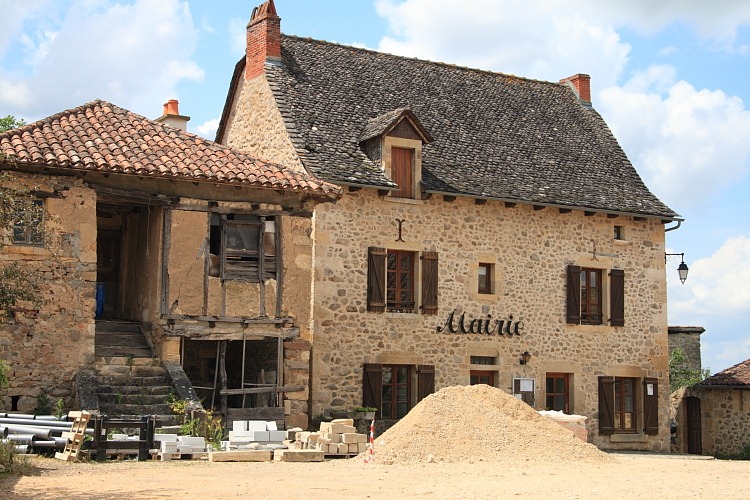
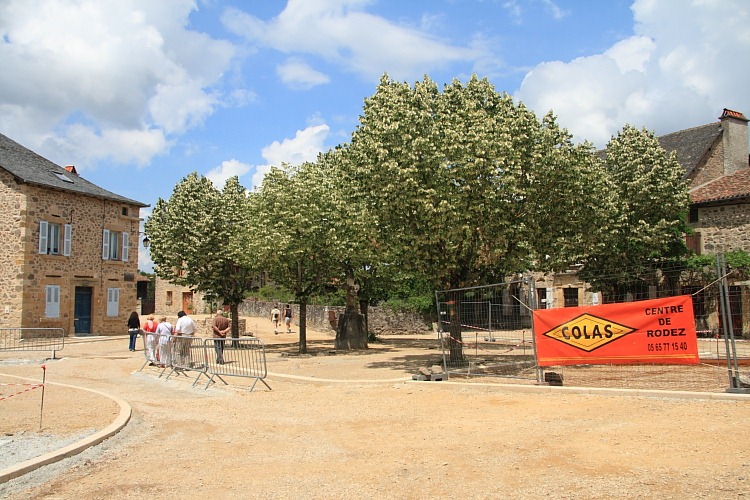
IMG_0722_Peyrusse-le-Roc IMG_0721_Peyrusse-le-Roc Peyrusse-le-Roc comes in two halves. Slightly lower down the slopes lie the remains of the old mediæval village abandoned around 1700. The Rough Guide says that this old village is gradually being excavated and restored. Above the old village and atop the hill lies a newer village which, we found out when we arrived, also appears to be subject to some serious restoration work. The main square is a complete construction site sporting barriers and raised kerb stones in place of anything resembling any road surfaces, and the Mairie, just off the square, is hidden behind a large pile of gravel as though it, too, is still being worked on by the builders. I suspect the gravel is actually destined for the square but the effect is one of complete chaos.

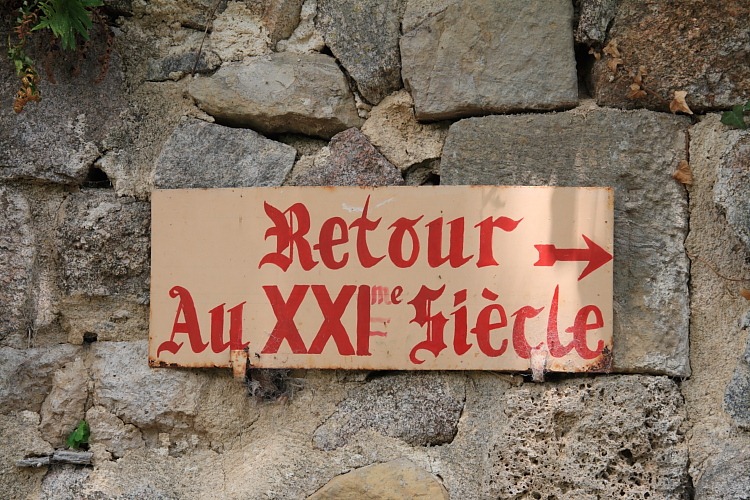
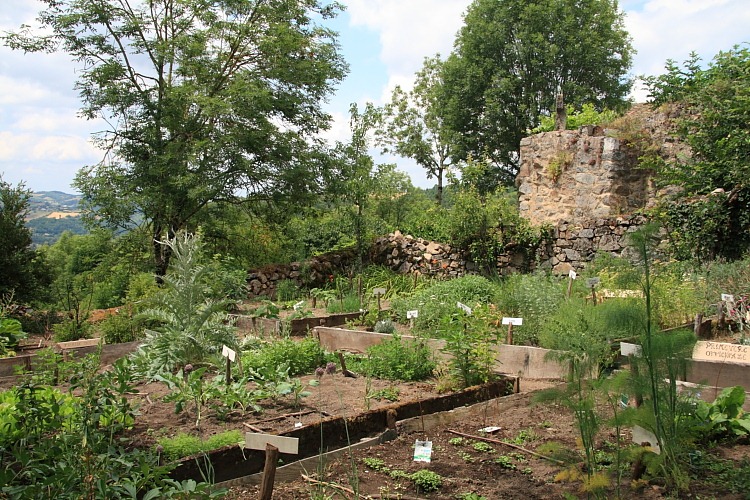
IMG_0718_Peyrusse-le-Roc IMG_0720_Peyrusse-le-RocFrancine wandered down one of the narrow, steep alleyways following a sign to a “mediæval garden”, whatever one of those is. Having struggled up a steep incline to get from the car park to the village, I was darned if I was going to follow to see a few old plants, only to have to climb back up again before descending once again to our car. In staying behind, I missed a little French humour. On the exit from the mediæval garden was a sign saying, “Retour au XXIme siècle” [Return to the 21st century]. Clearly, the sign had been there at least 11 years because it obviously used to read “… XXeme…” and what it should now have said was “… XXIeme …” but, in a new millennium economy drive, the “I” had simply been added over the first “e” of “eme”. No matter, it was fun anyway. Maybe when they’ve finished restoring the village they’ll be able to afford a new sign.

Our advice concerning Peyrusse-le-Roc is, don’t bother until it’s finished.

Posted in 2011 Spring Tagged with: , , ,

These Little Piggies

It’s almost impossible to believe but we’ve been in France for nearly three weeks and we haven’t yet been to a street market. Street markets are pretty much a religion in France except, it seems, in the Marais Poitevin where we spent two of our first three weeks. For some reason the villages of the marais appear to be a bit of an exception and street markets are as rare as hens’ teeth. In areas of France that do adhere to the market religion, attending them is either a matter of luck or must be carefully planned. Some larger places have two markets a week but most have just one. You plan them, or you happen upon them.

By arriving at Figeac on Friday, we happened upon its market which is held on Saturday. Hoorah! We are camped within walking distance of town so, market bags in hand, at about 10:00 AM on Saturday, off we set à pied.

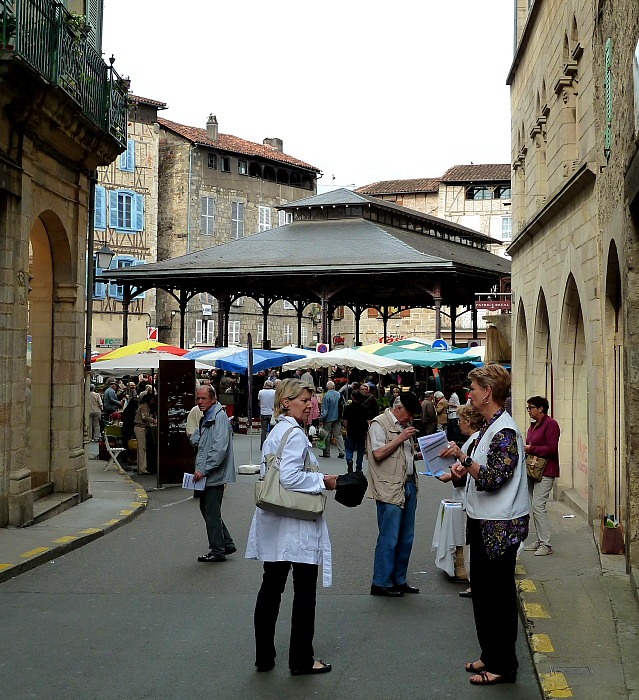
P1010213_Figeac P1010219_Figeac Figeac is not particularly colourful but it has a splendid old metal market hall around and under which cluster many of the modern stall holders. The market is quite large, spreading along several streets radiating off the old market square with its splendid metal halle [market hall] seen in the background of this picture (left). gives an impression of the elegance of the old structure. (The lady in the right foreground is trying to drum up support for blood donations, BTW.) On our wandering way to the market, Francine grabbed this other picture of a local gentleman setting out to market dragging his wheeled shopping bag behind him along one of the typically narrow streets. Slightly curiously and unique in markets of my experience, I failed to spot a fresh fish stall, though that’s possible simply because I missed it in the sprawl of stalls.

P1010210_FigeacMarkets aside, Figeac is noted for two things, in the main. One is for some of its buildings’ old solelhos. The town was a centre of tanning in the Middle Ages and the solelhos were open wooden sided galleries on the topmost floor of tanners’ buildings used for drying skins. Now they are converted as accommodation and one can be seen in the centre building of this picture.

The other thing that Figeac is noted for is being the birthplace of Jean-Francois Champollion who famously cracked Egyptian hieroglyphics by deciphering the triple text of the Rosetta Stone (it says here). This is a little difficult to capture photographically although there is a museum with hieroglyphs placed strategically. The market got in the way, though. 😀 It must have been arduous work because the poor man died aged only 41.

Hopefully we will live long enough to stay here for a day or two before moving on to our next stop.

Technorati Tags: ,,
Posted in 2011 Spring Tagged with: , ,

A World Apart

Yesterday’s planned itinerary to the mediæval town of St. Céré turned into a slight disappointment. Admittedly, being the Ascension public holiday, St. Céré was basically closed along with the rest of France, though in typically Gallic fashion several locals were drinking and eating at street cafés. A river flowed through town but it seemed unable to realize its potential in the shadow of several unattractively designed and built minor bridges. A suspected Sand Martin (Riparia riparia) seemed to be less than concerned about the inelegant designs, though, as it swooped along the river occasionally zooming up to the undersides of the bridges.

Francine’s stomach was beginning to demand sustenance in the form of a pique-nique we had packed. We knew the perfect place to enjoy it. On a swift visit to the Tourist Information yesterday we had collected a leaflet about the Marais de Bonnefont, with a 2km pathway over boardwalks through a variety of marsh and wildlife habitats. Another marsh! All this and picnic tables, too – irresistible. 🙂 We set off without further ado.

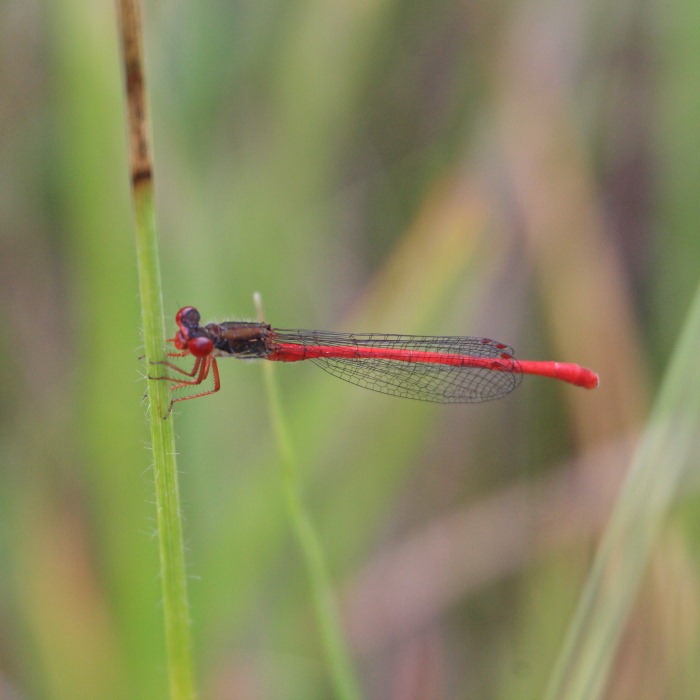
IMG_0103_Small_Red_Damselfly We weren’t expecting too much but it turned out to be a real gem; thoughtfully created, beautifully managed and well maintained. The boards said the walk was 2kms/2hrs so they were clearly expecting us to be well distracted and they were absolutely right. In the first steep bank of grass we spotted a new damselfly for our collection, a Small Red Damselfly (Ceriagrion tenellum). I saw only one and it was a bear to photograph in the long grass but we got something recognisable.

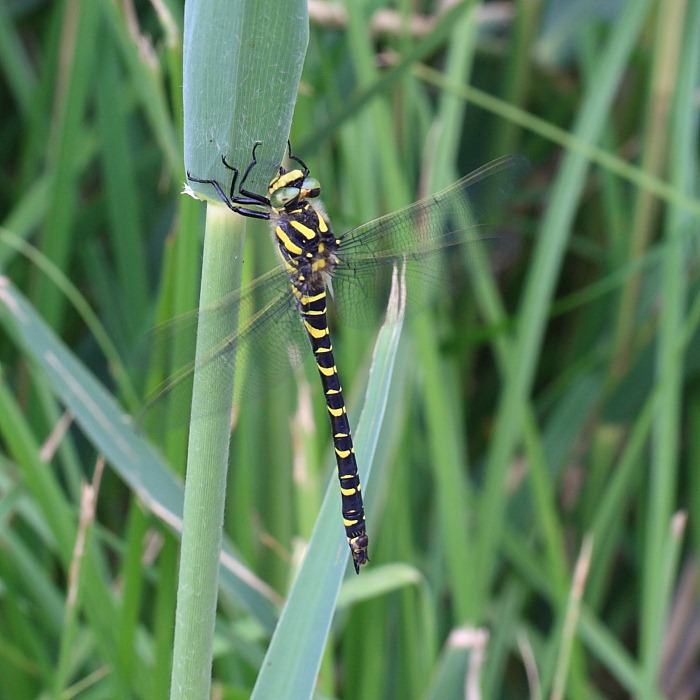
Further round a boardwalk section in grasses 2m/7ft tall, I was concentrating on another damselfly high up in an un-photogenic location when Francine almost shrieked, “Jesus, there’s a Golden-ringed beside you!”. “Yeah, yeah”, I thought. She’s been well taught – sure enough, ~1m/3ft away and ~1m/3ft above ground level, hanging on the reeds sat an utterly magnificent Golden-ringed Dragonfly (Cordulegaster boltonii) with its wings trembling strangely. This was a female and they are huge.

IMG_0626_Golden-ringed_femaleProblem. I’d got my close-focus ring on for small damsels. It’ll focus down to about 1.25m/4ft at max telephoto (400mm) but this 747 of dragonflies overflows the viewfinder at that distance/magnification. I can’t reduce zoom below about 300mm ‘cos then the combination of lens and ring won’t focus at all! I was reticent to move for fear of scaring off the Golden-ringed. Fortunately, while I was muttering about the photographers curse – a camera always being set wrong for the next subject – and trying to reconfigure my camera, Francine stepped in with her macro lens to bag a shot of this strangely cooperative individual. Bravo – second new species! I did manage to back off and get a shot myself and shortly afterwards it stopped trembling its wings, flapped them powerfully and zoomed off. It can be very handy having two cameras equipped differently in such situations.

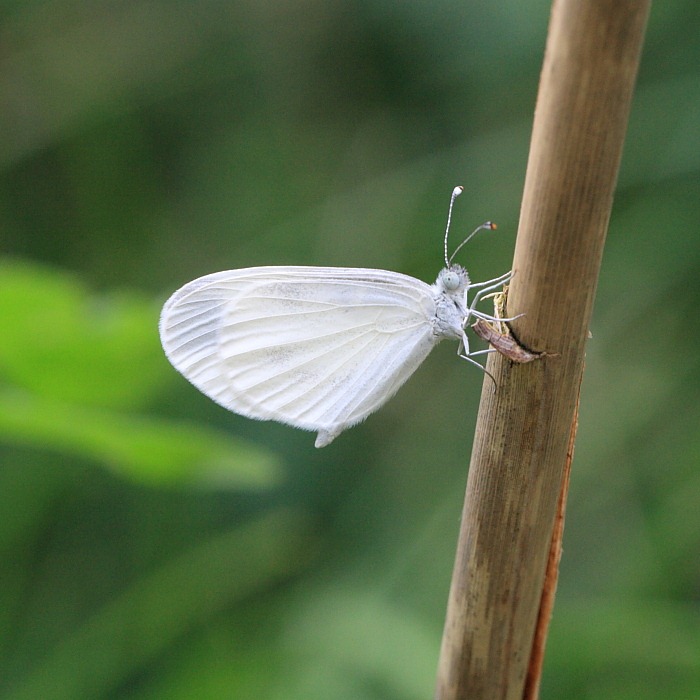
IMG_0630_Wood_White There was more to come. At a patch of blue damselflies I spotted a white butterfly that might easily have gone overlooked. Whites are not normally exciting but this looked different and, indeed, it was. I’d never yet seen a Wood White (Leptidia sinapsis) but I suspected I was looking at one now. It was a wonderfully delicate creature, unconcerned enough to let Francine’s macro lens in close yet again. Third new species!

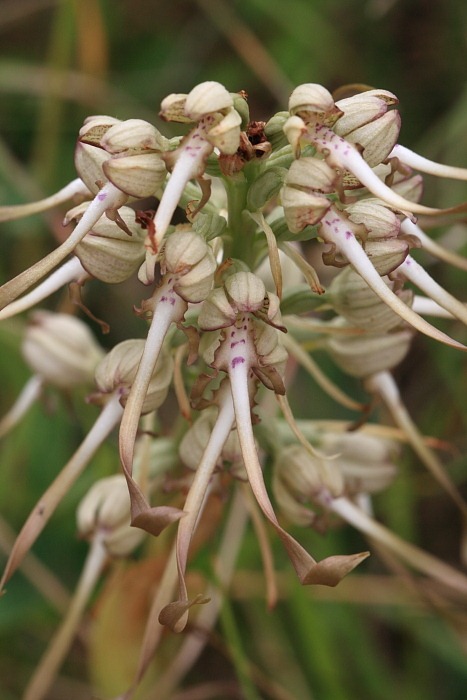
IMG_0650_Lizard_Orchid Insects aside, Francine was also well provided for by orchids. She snagged one of these intriguing Lizard Orchids (Himantoglossum hircinum) together with another as yet unidentified orchid for her collection so there was something new for everyone. She’ll try and identify the new orchid back at home where the heavier elements of her flora library remain. We were two very happy visitors to a well planned and constructed, modest local nature facility.

Not so well constructed was our Rocamadour campsite. We returned to an even more crowded site swamped mainly with camper vans. At about 10:00 PM, up went the disturbing territorial call of Homo sapiens subsp. tourista, “what the f***’s happened to the electricity?”. A main contact breaker had flipped, taking out an entire file of pitches. Even if one pitch was drawing too much power, the remainder should be isolated from them. Un Monsieur reset the supply and promised to check it again at midnight. We retired for the night.

I checked the electricity again at 4:30AM (don’t ask, guess): we were powerless once more. We awoke to the now regular surrounding chorus of,what the f***’s happened to the electricity?” Enough is enough; an unimaginative, crowded campsite full of squealing rugrats and yapping dogs together with an unreliable electricity supply – time to move. Just to add insult to injury, one nasty little canine creation saw fit to cock its leg up my electricity cable reel. Shame it was well insulated! 👿

We’ve moved a mere 28 miles/40 kms to Figeac and found a very pleasant site that feels a world apart. The pitches are neatly hedged and twice the size of the Rocamadour site. It isn’t crowded, it is calm and appears very civilized with (hopefully) a reliable power supply. We’ve swapped rugrats for a collection of what I can best describe as senior French cyclists, who appear to be here in force – more power to them. Once again we feel like relaxing and dining outside Guillaume en plein air. No contest!

How variable these things can be.
Posted in 2011 Spring Tagged with: , , , , , , , ,

Dawn Chorus

Most mornings in the Marais Poitevin, we awoke to a regular but fascinatingly varied dawn chorus started, as at home, by a Robin proclaiming his territory. He was quickly joined by a Song Thrush and a Blackbird before various other songsters, including a Wren, Chaffinch, Nightingale and Golden Oriole, joined in, each proclaiming their own territorial slice of the marais. What an avian joy it was.

At our relatively overcrowded campsite overlooking Rocamadour, our dawn chorus consisted of a Pigeon cooing, followed swiftly by the territorial call of Homo sapiens subspecies tourista muttering, “what the f***’s happened to the electricity?” Both ourselves and our neighbour seemed to have lost power overnight.

Our neighbour said (in French) that the electricity supply had been fine until about 7:00 AM when they started making coffee and grilling les tartines. Hmmm, suspicious! I went to see madame who flicked a circuit breaker and our supply was restored. Not so our neighbour, whose van remained obstinately dead. They were convinced it was a campsite problem, madame was convinced it was their problem. She switched them to another supply and they remained dead. I tried their electricity port and it worked. The problem was in their van. “Someone” had attempted to draw to much current and popped the circuit breakers. They eventually found a breaker popped in their van also. Case proven!

Most camping electricity supplies en Angleterre are 16 amp – quite sufficient. En France, 6 amps is probably most common where great care is needed. There are a few archaic sites with a particularly desperate 4 amp supply which is next to useless (fridge and lights only). Some sites, this included, supply 10 amps which rates as fairly luxurious but still requires care. A domestic electric kettle draws 10 amps; one has to choose one’s camping appliances carefully and certainly one has to be wary about using which of them one uses in combination. We’ll see what happens tomorrow morning.

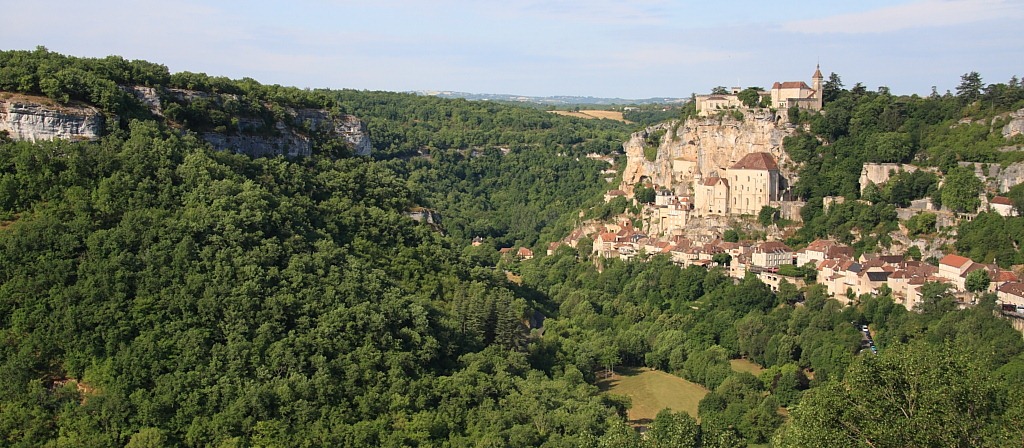
IMG_0045_Rocamadour Having been awoken early and seeing unexpected sunshine, we wandered off à bonne heure to view Rocamadour with the light in the correct quarter. It looked very impressive indeed. This is why half of France had descended upon Rocamadour on their irritatingly placed (i.e. coinciding with our trip) long weekend public holiday. So, here, in my good ol’ fake Fuji G617 format which can produce some lovely landscapes, is what the fuss is all about. (If only I had an unwanted £10K to spend on the real camera and associated special lenses and filters.)

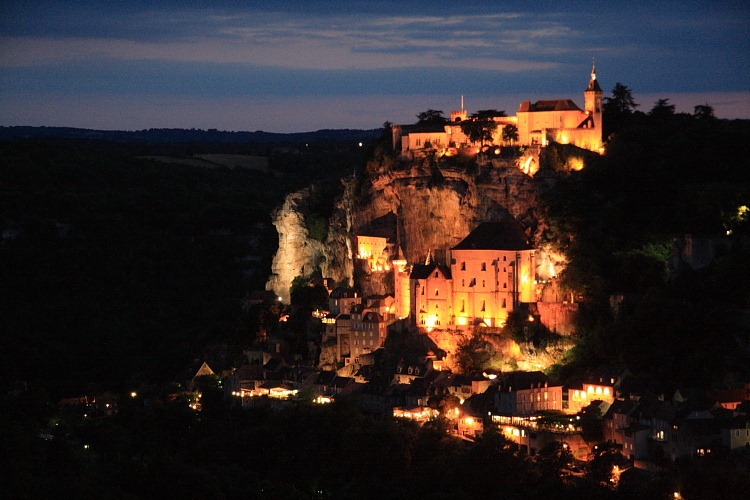
IMG_0667_Rocamadour_at_night Just to complete the picture, here is something approaching the other traditional tourist shot: Rocamadour at night.

A weather report tomorrow will probably decide whether we stay among all these yapping dogs and rugrats, or whether we try to move on to similarly crowded but hopefully calmer places. Expectations are that we’ll not be able to avoid it until Monday next week.

We used to do this voluntarily in late July/August when everywhere was crowded. I have no idea how.

Technorati Tags: ,,
Posted in 2011 Spring Tagged with: , ,

Suspension of Sanity

Our overnight stop at Brantôme was quite pleasant with broken cloud/sunny intervals and a riverside pitch complete with a friendly moorhen, which I’ve never before witnessed. It’s diet was fascinating, too. As well as tromping across teh grass to retrieve morsels of bread thrown by yours truly, it would suddenly tear off and strike down a flying beetle with deadly speed and accuracy. We also saw it lugging a worm out of the ground. Moorhens have quite a varied diet, it seems.

P1010207_Durex We wandered back into Brantôme before leaving to get bread and a French treat for breakfast. I had been too busy looking at the Disney-esque buildings yesterday to notice this intriguing machine in the car park. Most machines in car parks tend to dispense tickets. Not in Brantôme; in Brantôme’s car park you can buy condoms. Presumably this is just in case you happen to bump into someone completely irresistible whilst parking your car.

We left and headed for the upper reaches Dordogne. The sunny intervals were replaced by rather more solid grey skies as we neared our destination. Our first attempt at finding a site was less than successful – it was little more than a car park under trees with electric hook-ups. It was also on a small bluff facing directly into quite a strong wind. We elected to try a site in Rocamadour that we found many years ago, just 20kms/13miles further on. We turned off the road into the entrance to be greeted by a sign that said it no longer took motor-caravans or caravans. After some deft reversing and turning, we found an alternative, still in Rocamadour.

Half the French world has found the same site in Rocamadour. Owing to this year’s ridiculously late Easter, tomorrow, Thursday, is Ascension and is a public holiday. France is having a long weekend complete with Satan’s Little Disciples being on the loose. The relatively full site makes it feel like August – other than the grey skies.

Two things have collapsed: the weather and any hope of tranquility. We’ll just have to grin and bear it for the weekend, though we could try to find somewhere less touristy which may be a little calmer.

Normal service will be resumed as soon as possible.

Technorati Tags: ,,,
Posted in 2011 Spring Tagged with: , , ,

Overnight Brantôme

At last we’ve uprooted ourselves from the Marais Poitevin, bade farewell to Mike and thanked him for his excellent hospitality and Thai food, and hit the road again. Thirteen nights at one place is a long time for us but then, it is a great area for cycling nature fans. We have decided to make for the upper Dordogne valley and Brantôme, on the river Dronne, seemed like a useful overnight stopping off point en route.

We dropped in to Brantôme once about ten years ago so we knew roughly where we were heading and what to expect. The campsite is an adequate, if unscintillating, camping municipale on the edge of town. There is a house beside the entrance and both Francine and I remembered five intensely irritating poodles that yapped frantically, seemingly in competition with each other, whenever anyone passed by. What a lasting impression such things make. “At least they should be dead by now”, we mused to ourselves on the journey.

We pulled in to the campsite close to opening time (2:00 PM) to check in. Four intensely irritating poodles were yapping frantically at their garden fence. A fifth, very small poodle joined in. The owner looked on adoringly from a balcony. Maybe he’s deaf? He certainly must be very keen on yapping poodles.

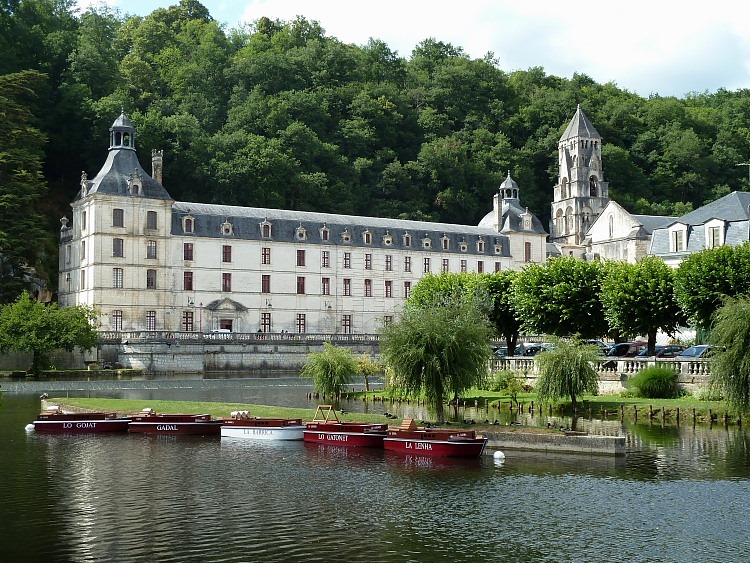
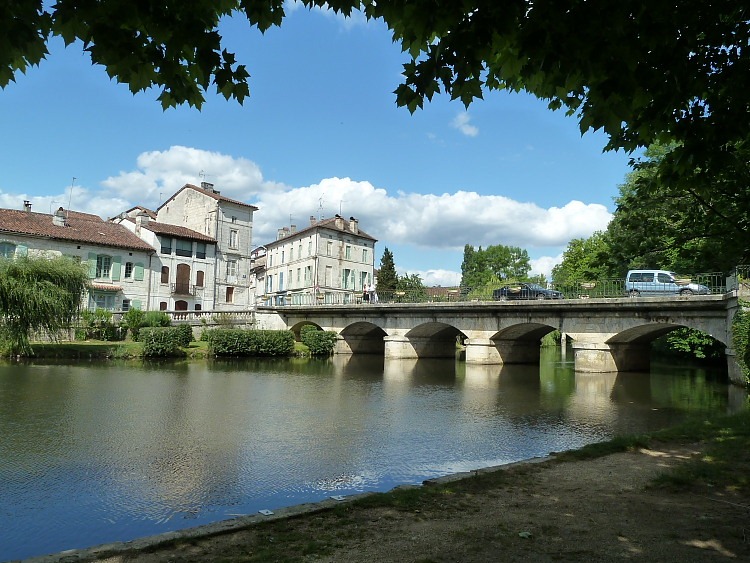
P1010195_Brantome Purely by chance, we have travelled from the so-called Venise Verte to the so-called Venise du Perigord. On our first visit, Brantôme struck me as being vaguely cartoon-like in a Disney kind of way. Were one to ask a drug-intoxicated Walt to design a cartoon French town, this is what I imagine he’d come up with. There are some impressive towers on a particularly impressive building, actually the hôtel de ville, where the wicked witch of the north is probably force-feeding a ravishing blonde princess to make foie gras de princesse. (Well, we are in the Perigord.) In a boat, up paddles a gallant and handsome prince intent on rescuing his damsel in distress but, alas, the wicked witch turns him into a clutz whereupon he falls into the river, is knocked unconscious on one of the many bridge piers and drowns. Unlucky princess!

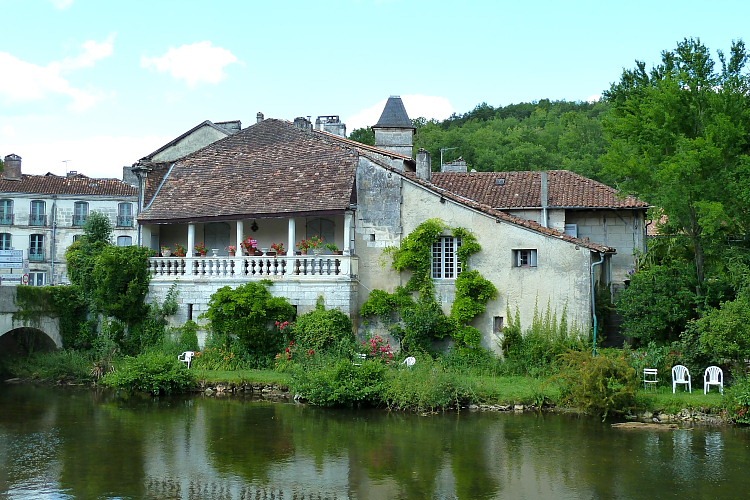
P1010190_BrantomeP1010194_BrantomeP1010205_Brantome Pâté anyone?

Technorati Tags: ,,
Posted in 2011 Spring Tagged with: , ,

Marais Revisited

Well, if this was an example of a French stormy day, bring it on. There were a couple of spells of rain overnight – other than precisely three drops when we were out scouring the countryside for Francine’s orchids this was the first rain we’ve had – and the morning did dawn with a solid grey overcast but that soon disappeared and blue skies returned. That tiny amount of rain will have done nothing for the water shortage currently being experienced. Still, every missing cloud has a silver lining and blue skies are good for the tourists. We’d thought that yesterday would be our last active day here but we hit the pedals again to make the most of our good fortune.

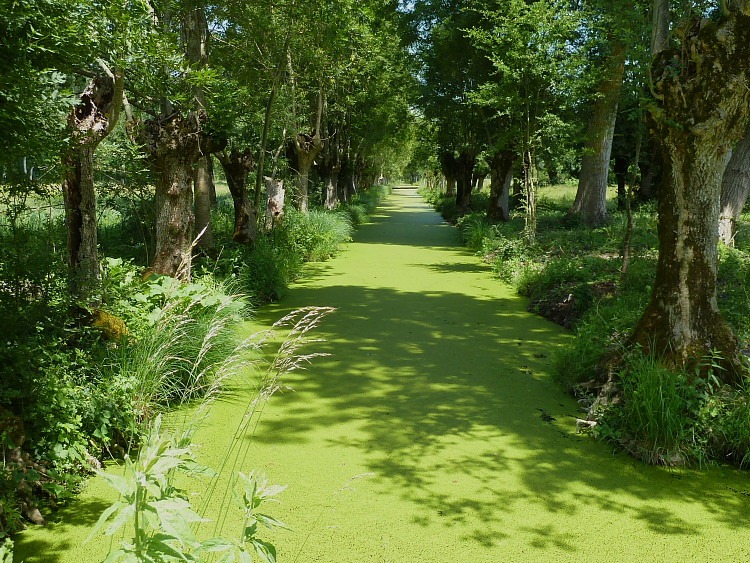
The Marais Poitevin is also subtitled Venise Verte [Green Venice]. The “Venice” bit is pretty obvious, it’s to do with the low-lying area being crisscrossed by almost countless drainage channels and canals. The “Green” bit is to do with the channels getting completely blanketed in floating, bright green duckweed. On previous visits, this green colouration has been very prevalent but this time we had hitherto seen very few channels sporting their traditional green overcoat. Our friend, Mike, has a theory that this reduction is connected to there being rather less sewage dumped in the canals nowadays. Hmm. Less nutrients = less duckweed. Sounds plausible.

P1010182_Venise_Verte P1010187_Venise_Verte Today we cycled to a different section of traditional marsh around Amuré and found some excellent examples of the bright green channels we had come to expect. Yikes, don’t fall in here! One shot is of a village’s embarcadère and also shows some splendid examples of the traditional flat-bottomed barques used as transport around the canals in the marais.

P1010185_Donkey_TracksWe are quite used to the signs for the bicycle routes, les pistes cyclables, and for the French walking routes. This photograph shows the light blue cycle track signs used around here and, on the tree behind, you can make out one of the walking route signs which are pretty much universal to France. Check out the post below the cycle route signs, though. Here is something we’ve seen only in the Amuré marsh: donkey routes. How utterly charming.

I wonder what the French for a donkey track is? Piste Ânable, perhaps? [Un âne = a donkey.]

Posted in 2011 Spring Tagged with: , , ,