Whilst leaving Frodo overnight at Mr. Lola’s house near Stroud on our way down, we left the fridge running overnight on gas, something we very rarely do. Unfortunately, in the morning Frodo’s fridge was not on – the gas had run out. It wasn’t a disaster, the fridge was not too warm in the morning. We continued to the St. Agnes campsite running on the 12V driving system, followed by mains electricity once we checked in.
Whilst at St. Agnes, thinking of a potential off-grid stop en route home, I decided to change to our second gas cylinder. What I couldn’t do, try as I might, was get a gas-tight seal between the connector and the new gas cylinder. Calor gas connections are archaic and a complete pain-in-the-arse. I phoned a couple of caravan/motorhome engineers and one suggested that I may have a faulty gas cylinder, not something I would have considered. As an experiment, I exchanged my empty cylinder for a new one on site. Sure enough, I just about managed to get a decent seal on the replacement, so my second cylinder did, indeed, look a bit iffy. We could now, at least, stop off grid if we needed to.
All this hassle made us think about a fixed refillable LPG solution. It would certainly make camping off grid in Spain and/or France easier, where you cannot exchange Calor Gas cylinders. I thought I’d like someone’s opinion who had experience of such systems.
I remembered that a fellow dragonfly enthusiast, who I had never actually met, had a motorhome with such a system. I sent an enquiring note explaining that we were currently in Cornwall, had had gas connection difficulties, and seeking his opinion on refillable systems. He was now on his second motorhome, having just bought a new one, with two different but similar refillable systems. He thought both were excellent.
“Where are you?”, he asked.
“At Godrevy at the moment but moving to Marazion in a few days. We were at St. Agnes Beacon last week. We arrived on Sunday 20th.”
“We were at St.Agnes Beacon last week, too. We also arrived on 20th. We’re at Gwithian Farm, now“, he said, “fancy a beer at the Red River Inn this afternoon?”
I couldn’t believe it, we’d been on the same campsite last week and now were a mere 15-minute walk away from each other.
“Great idea”, I said. They were planning to walk a bit of the Cornish coastal path today first so we settled on 17:00 to meet.
“We have a whippet”, he added.
Wait just a goddamn minute. Whilst at St. Agnes Beacon, we had talked to a couple with a relatively large whippet in tow, twice on the campsite and once in the middle of St. Agnes itself. They had told us that the handsome whippet was called Stanley.
“Not as large whippet?”, I asked, “Stanley by any chance?”
“Good God …”, came his response.
Unbelievable! Here was a fellow dragonfly enthusiast who I’d been communicating with electronically for several years but never actually met, and our paths had crossed in Cornwall with neither of us realising. We were both gobsmacked.
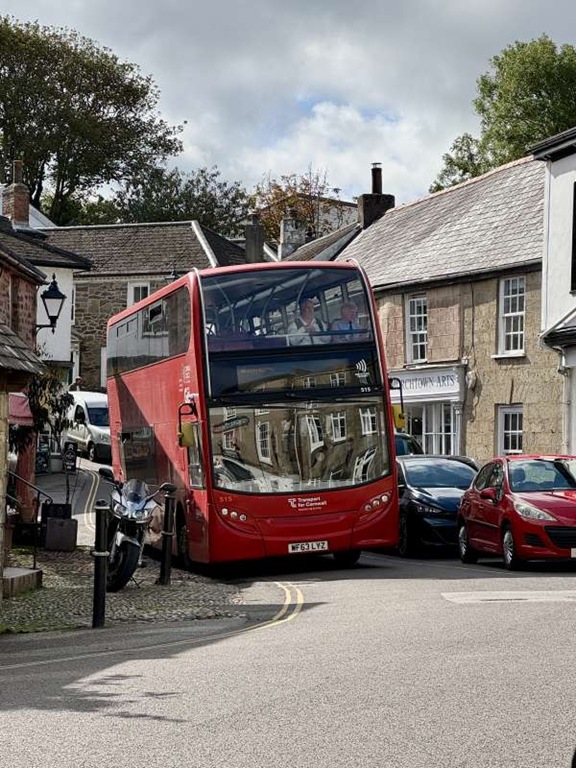
Still reeling from the astonishing coincidence, Francine and I decided we’d catch the bus [scary spiders] into Hayle for some entertainment.
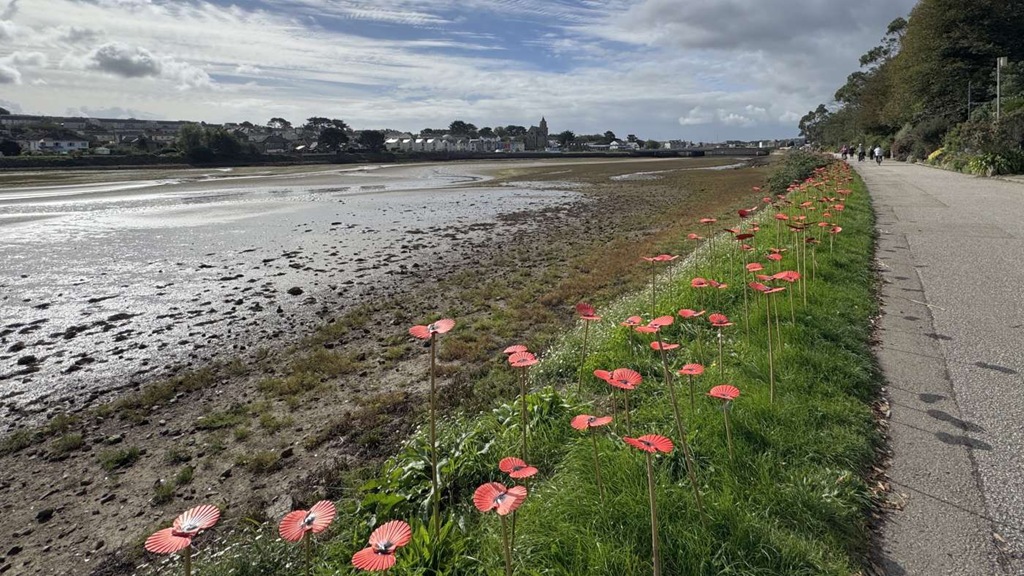
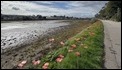 One of the attractions in Hayle was the King George V Memorial Walk featuring 2977 handcrafted poppies made of donated scallop shells. These honour every victim of the 9/11 Twin Towers attack. Whilst most of the poppies are painted red, there are 70 blue poppies for police officers, 344 with black/red ribbons for firefighters, 8 with green/yellow ribbons for emergency medical personnel and 1 purple poppy for the port authority K9 police dog, Sirius, who died in the collapse.
It may seem like an unusual location for such a memorial but the connection with Cornwall is Rick Rescorla, born in Hayle, who became the head of security for Morgan Stanley and who saved thousands of lives before losing his own life in the collapse of the South Tower.
It is all very poignant.
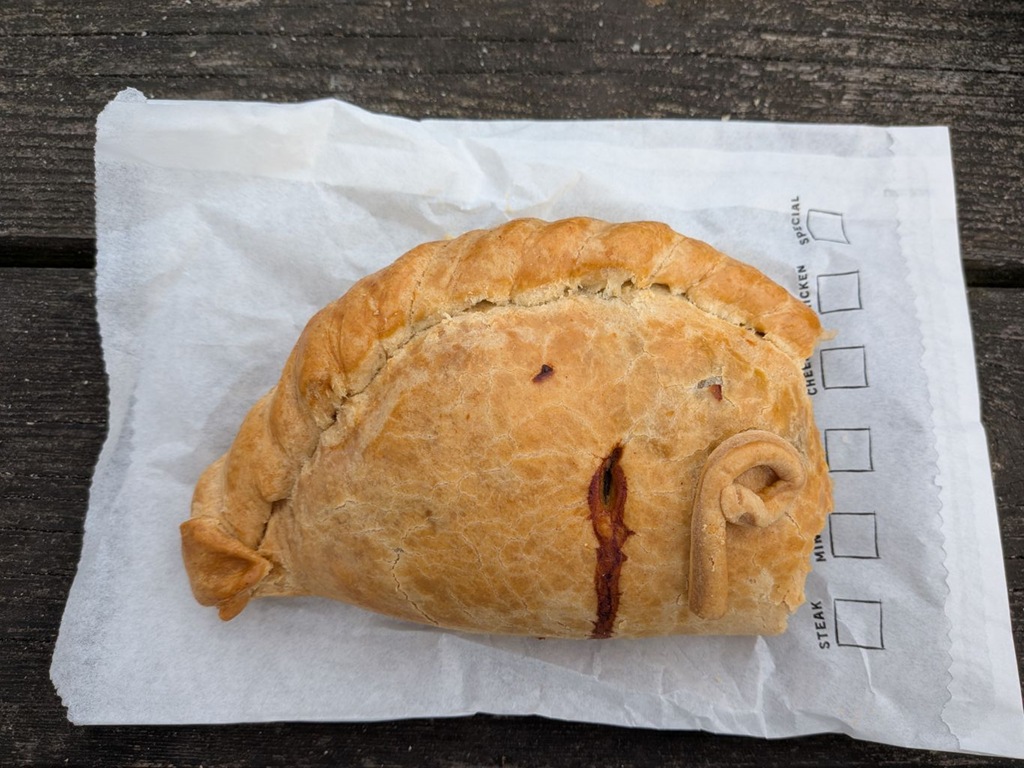
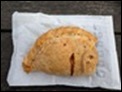 When we’d disembarked the bus, we’d spotted the Philps Bakery proclaiming its “famous pasties”. Well, lunch was calling and it would be rude not to try a famous pasty. They were certainly popular; I had to join a queue with half a dozen hungry folks in front of me. We sat at a wooden table outside to demolish ours. These were good, especially the steak in the filling, but we both thought those form the St. Agnes Bakery a little superior, especially the pastry, in my opinion.
We managed a lightning shop in Lidl before catching a return bus to the campsite.
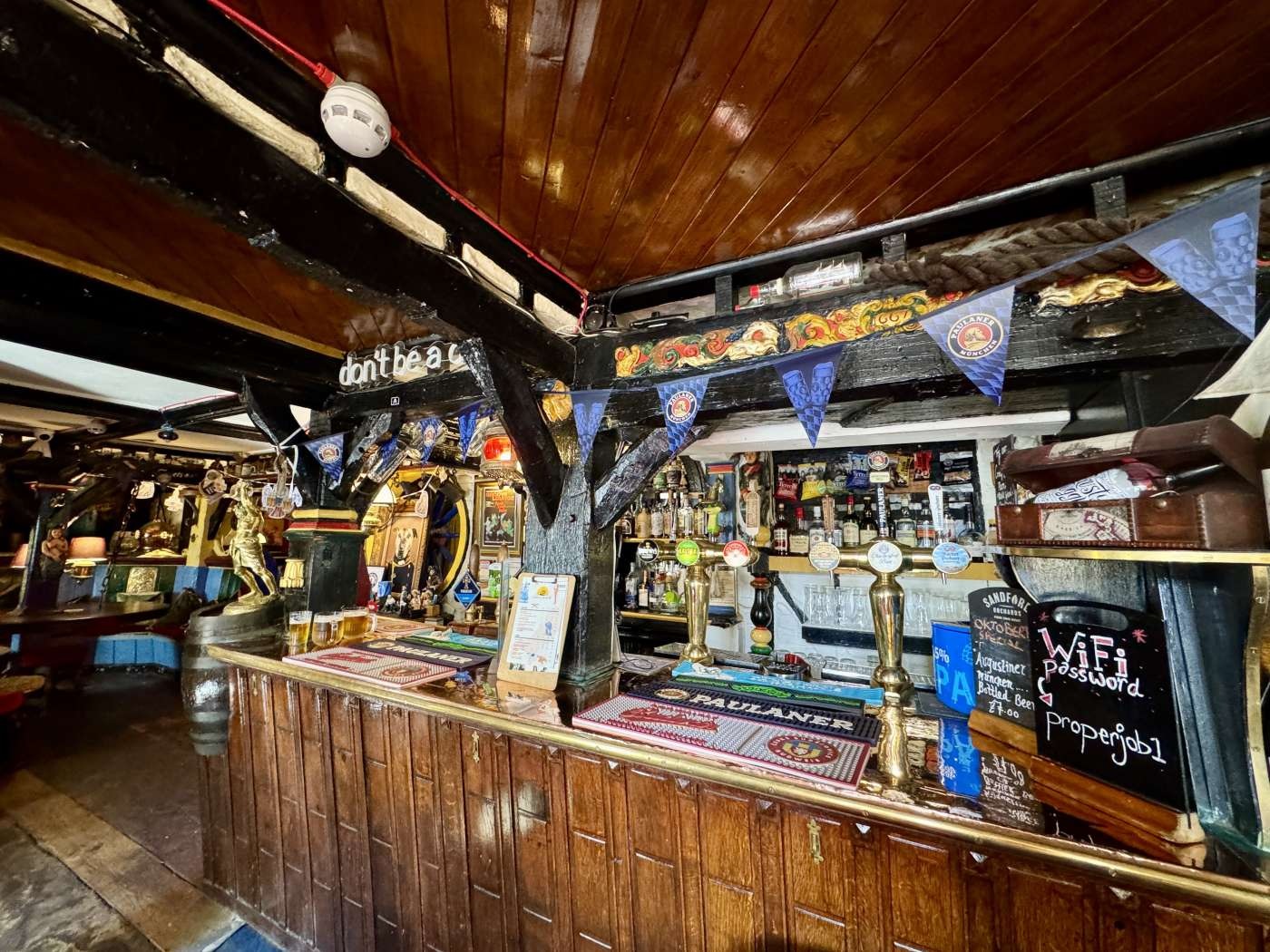
At 16:45 we started our 15-minute walk down to the Red River Inn to meet again my odo-nutter friend, this time knowing who we both were.
I’m still gobsmacked at the coincidence.
Recent Comments