
This afternoon we are due to fly to Jabalpur, part way to our first safari location, but this morning we were due to visit one of the Mumbai areas that we know as slums. There are 22 million souls in Mumbai and we were told that 11 million of them live in what we call slums. The one we’d be visiting is more correctly called by the locals, Dharavi. This was brought to the public’s attention by being the home of Slum Dog Millionaire.
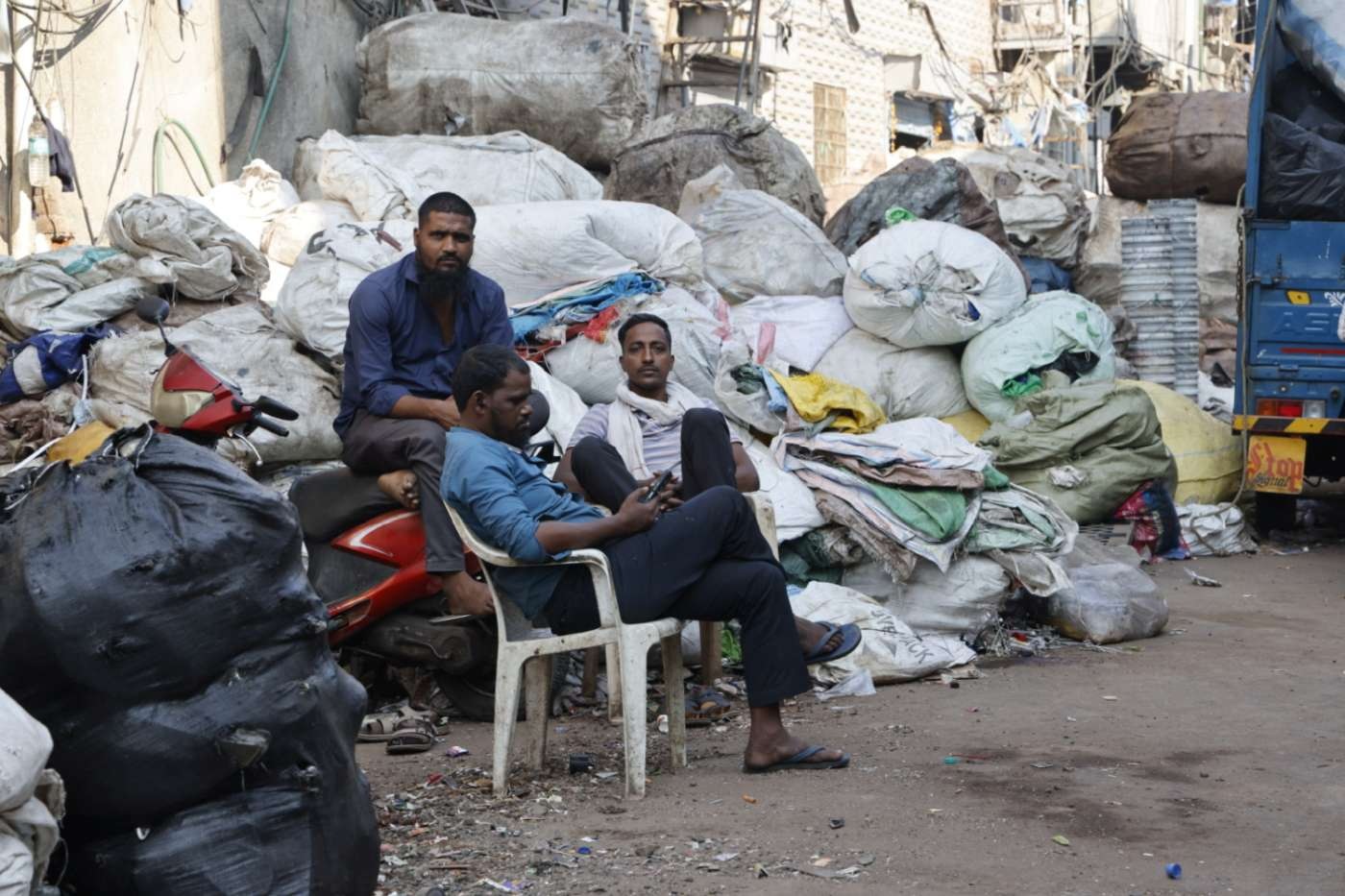 Dharavi is a very industrious place. Much of its work output is in the area of recycling, a lot of which is plastics recycling. However, it also produces many leather, textiles, and pottery products for market. Covering nearly 1 square mile, Dharavi has a population of about 1 million making it one of the most densely populated areas of the world. About 250K of these work in plastics recycling.
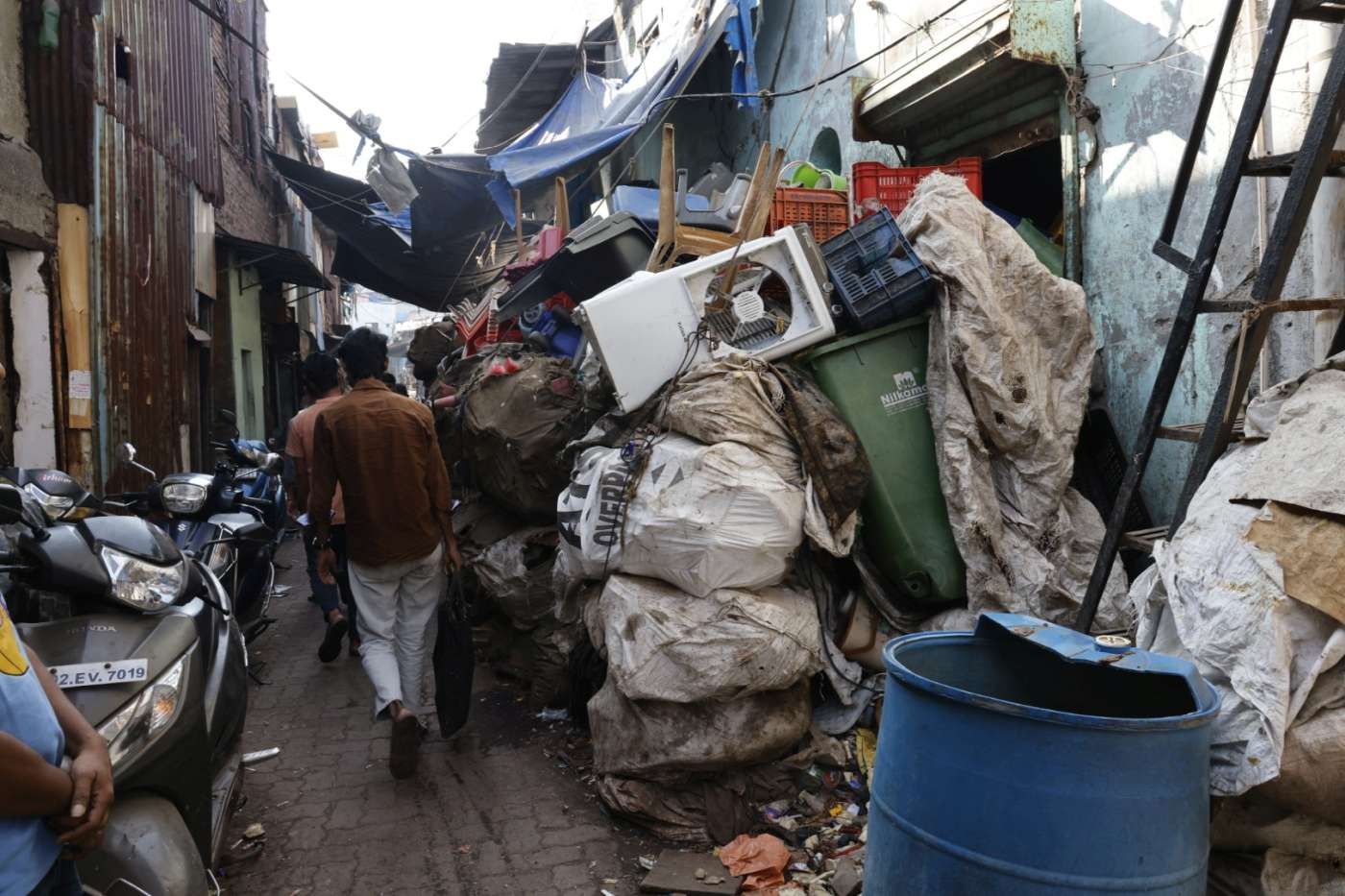
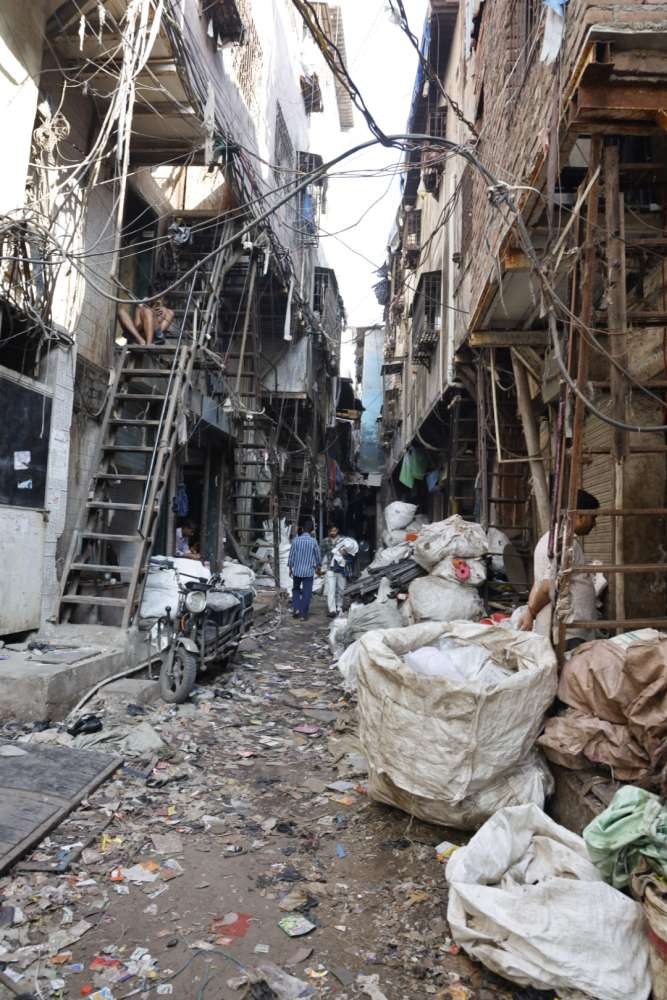 Dharavi is situated between Mumbai’s two main railway lines, one of which we crossed via a bridge to gain access. Descending to street level, we were soon in another world, one which we were very grateful not to inhabit. All the paths were a collection of discarded litter of one sort or another. Almost none of the accommodation has its own sanitation; there are a few communal toilet facilities. The area does also have its medical support. Once again, the industriousness of these people going about their physical labours in desperate conditions was notable.
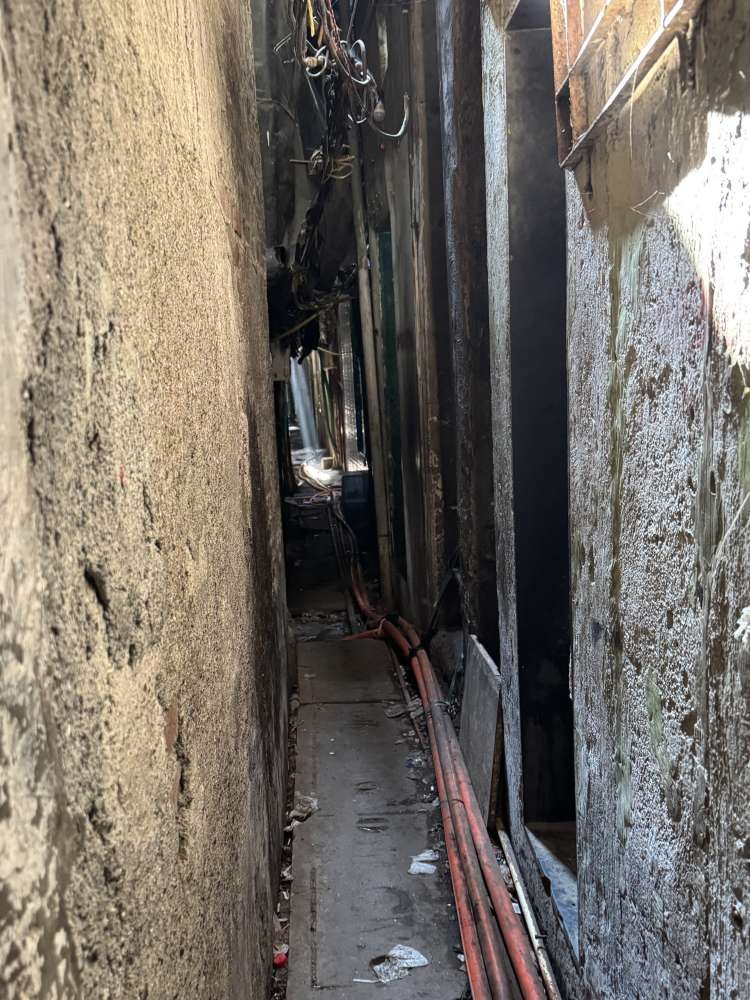 Our guide led us eventually through some very dark alleyways, just barely wide enough for my shoulders. The darkest simply couldn’t be photographed. Just seeing where we were going was a challenge. The people, though, seemed cheerful enough and there was no begging, as relatively prosperous (for a slum) that Dharavi is. Still, it was heart-breaking to see so many people having to endure such privations. It was good to break back out of the narrow alleyways into daylight.
The whole experience was a bit of an assault on our senses, including our olfactory sense. We were not in a particularly strong stench but after an hour or so the constant pervasive aroma did make its mark. We visited in the dry but we couldn’t imagine what the conditions might be like in monsoon season. I was relieved to cross back over the railway bridge to get to some fresher air and the bustling Mumbai traffic.
Time was running short as we drank an iced coffee waiting for our car to return us to our hotel to check out. The traffic was nose to tail such that we were getting anxious with the clock ticking down, indeed, over-running for one of our number. We just about made it in time to pay my bar bill before we were again collected by the car to transfer us to the airport.
As we approached the airport the traffic again kept stopping making us watch the time. We were being joined by a sixth companion, newly arrived from the UK. He was freshening up in an airport hotel after his delayed inbound flight. Good fortune prevailed and we all eventually met up in the departure area of Mumbai airport.
Our trials were not yet over. We were to fly on IndiGo up to Jabalpur. The checked baggage weight limit is a paltry 15Kg each. Our combined collection of six suitcases to check-in proved to be 9Kg over weight. There was much rearranging of items between the various bits of luggage until we finally managed to get close enough for the IndiGo agents to accept our bags and let us through to our departure gate.
Our flight was delayed but we eventually took off and headed for Jabalpur. We’re in the Hilton Gardens hotel ready for a 4-hour vehicle transfer to Bandhavgarh National Park in the morning.
Recent Comments