
Good ol’ jet lag. Yesterday evening we walked a kilometre or so with our companions to a Mumbai restaurant whose speciality seemed to be seafood in general, with crab being a particular attraction. Our leader, with the help of the proprietor, ordered a selection including the crab, of course, spiced prawns, pomfret fillets [a local fish], garlic and green chilli squid, butter chicken and jeera rice [rice with cumin]. ‘T was all very good but my particular favourite was the garlic and chilli squid.
We retired relatively early. India is a slightly bizarre 5½ hours ahead of the UK – divisions of a complete hour always seem weird to me, though I know not why they should. Naturally jet lag took hold and I awoke in the dark. It was only 01:15. I picked up a faint aroma – I seemed to be reeking of garlic. That squid had been great. I did get back to sleep after a while and the garlic aroma relented.
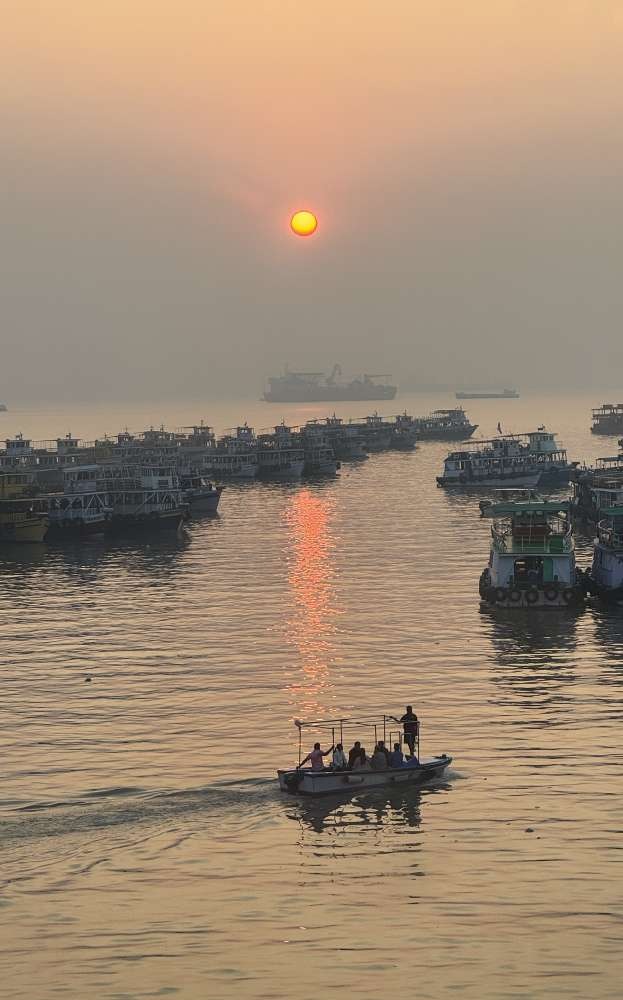 This morning we went down to the breakfast restaurant at 07:00; our leader would be picking us up at 08:15 for a tour of a couple of Mumbai’s tourist highlights. We chose a window overlooking the bay that is home to the Taj Mahal Hotel and how fortunate that we did. The hotel faces due east over the bay and the sunrise through the Mumbai smog outside our window was very atmospheric. Fortunately Francine had her phone with her for a record.
A taxi duly arrived complete with Mr. Leader and the driver took us very patiently through the jammed traffic that fills Mumbai’s roads to call at Dhobi Ghat, Mumbai’s laundry. Trust me, this is much bigger than any launderette, this laundry is the size of a densely packed compact village.
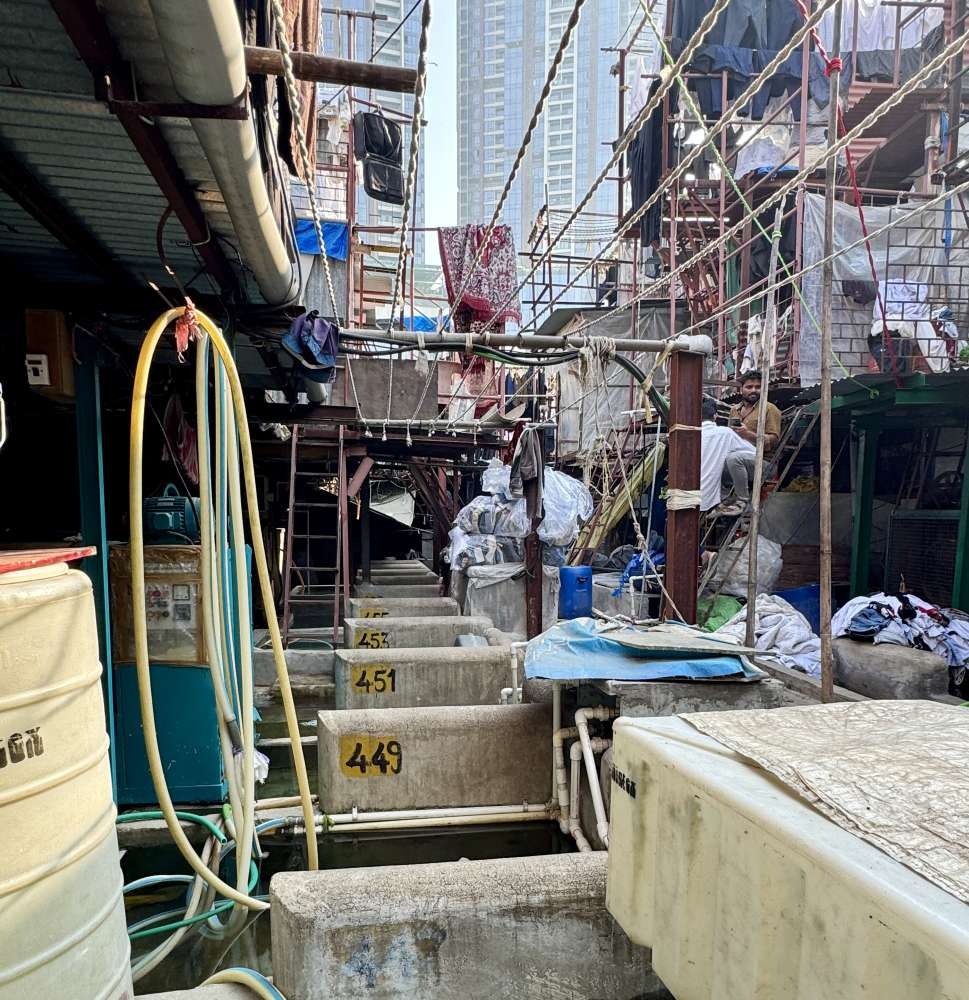
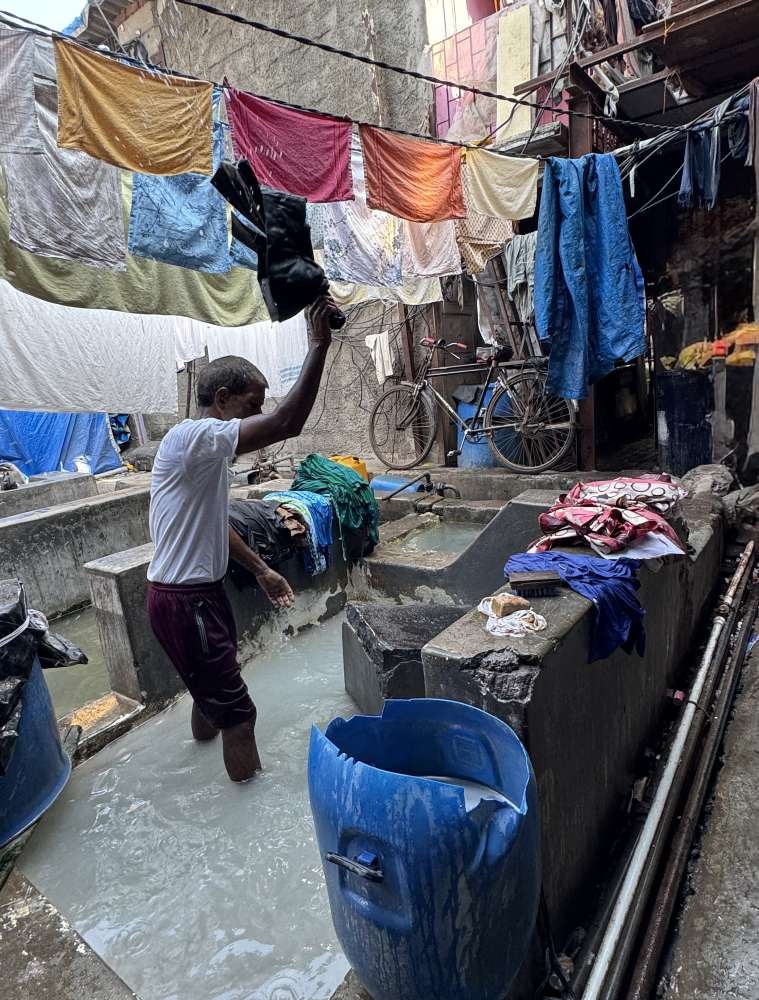 Several thousand people live and work here washing more than 100,000 items of laundry for hotels, hospitals and households daily. Families live and sleep on site in “houses” of a single room no bigger than our utility room back at home. The scale of the operation is quite staggering. Concrete wash pens, some including flogging stones, are numbered up to 800+. These belong to individual families who have their own clients. Industrial grade washing machinery fills the ground alongside the bins. Their water comes from the river; it is free for three hours and then metered. A constant stream of bundles of laundry slung across peoples’ shoulders is ferried in. This is all back-breaking manual labour on a scale that we cossetted western wimps could not comprehend without witnessing it. I, for one, felt humbled.
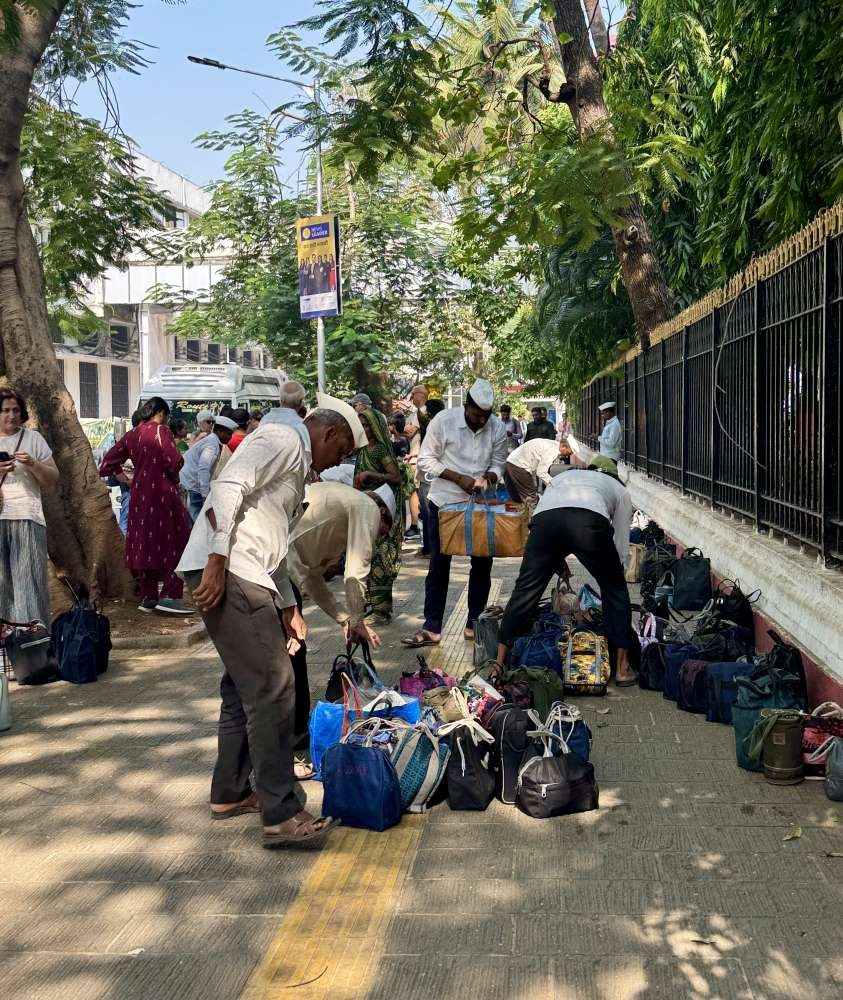 After our 1-hour tour of the laundry, we returned to the comfort of our air-conditioned taxi to be transferred to our next stop. We were off to see the dabbawalas. Some 5000 dabbawallas operate a traditional lunchbox pick-up and delivery food service for office workers across Mumbai. Food is cooked in homes then taken to a central point by one dabbawalla. On arrival, lunch bags are distributed along a pavement, positioned according to their eventual destination. These lunches are then delivered to specified locations by other dabbawallas, who know the buildings involved.
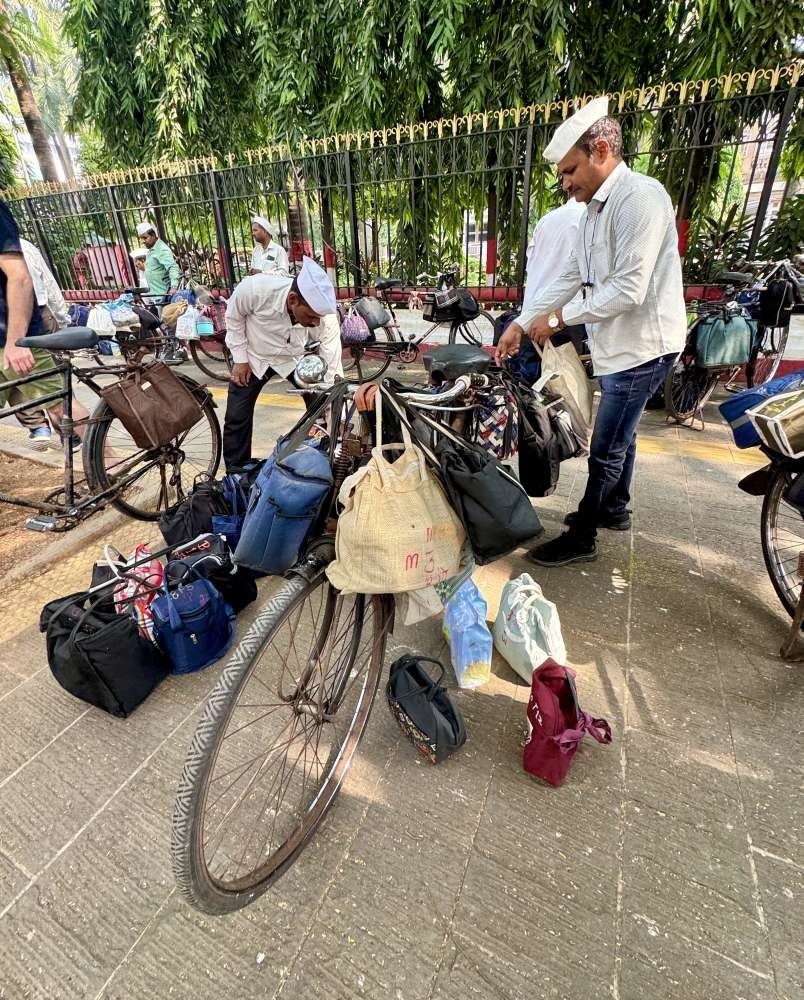 As you might expect, the term “traditional” implies a wholly manual operation. We watched the men loading 40 or so lunch bags onto ancient bicycles before pedalling off to their respective locations. It all looked a bit chaotic but it clearly works very smoothly to a well understood timetable: between 11:00 and 12:00.
I didn’t see the word “logistics” used once.
Recent Comments