Hitherto we have been on the Eastern side of Costa Rica, on the so-called Caribbean slope. The country is divided, pretty much down the middle, by a volcanic mountain chain, to the west of which is the Pacific slope.
Today, we bad farewell to our hill-billy shack in Santo Domingo, taking our rubbish with us as instructed. With yesterday’s weather having been a let down, Mr. Leader wanted another crack at Volcán Tenorio, so we repeated the 5km, 30-minute drive along the roughest roads I’ve ever seen, roads best suited really to Toyota Land Cruisers. Our little Toyota rental car managed admirably when driven judiciously and we were wondering it has permanent 4WD.
We drove through more cloud/mist than yesterday and predictably arrived at a socked-in Volcán Tenorio base camp. At least base camp had a decent, though expensive, breakfast. (It cost more than yesterday’s excellent tilapia lunch.)
The situation had not improved after brekkie so our leader took the decision to cut our losses and seek better fortune by crossing over the range to the Pacific slope. This was our next destination anyway, we just hit the road earlier in the day than originally planned. Starting in the mizzle, which then turned to real rain, something of a repeat of yesterday, we were soon descending on decent tarmac roads heading for strange patches of blue in the sky ahead of us. The patches grew bigger. It looked as though we’d made the right decision.
Mr. Leader had not intended to be half a day ahead of schedule so decided to try the Parque Nacional Palo Verde. It was on his itinerary anyway but not quite this soon. We turned off a roundabout to find ourselves back on gravel roads – real gravel this time, considerably smoother than our recent stone/rock affairs. We began our approach.
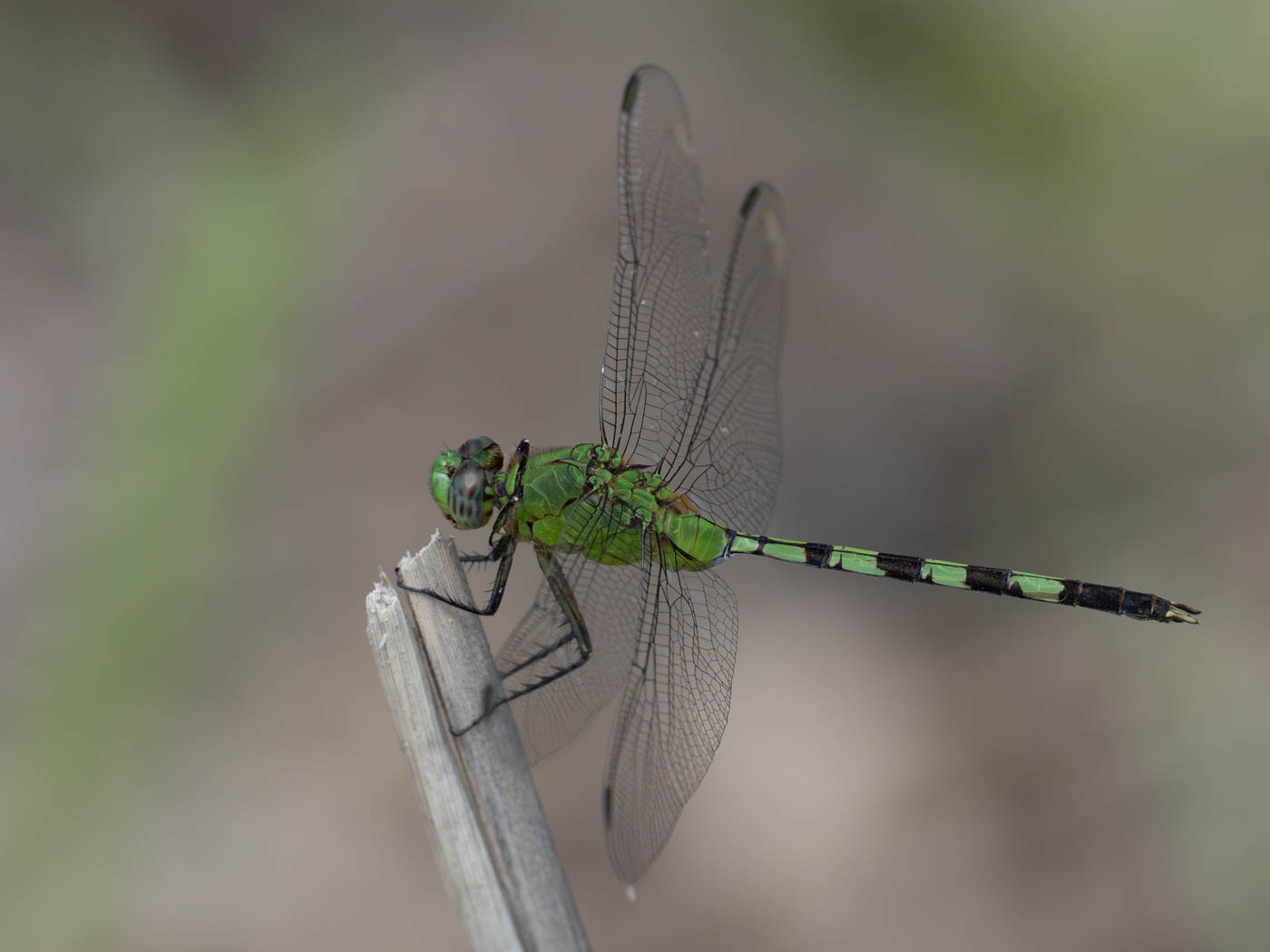
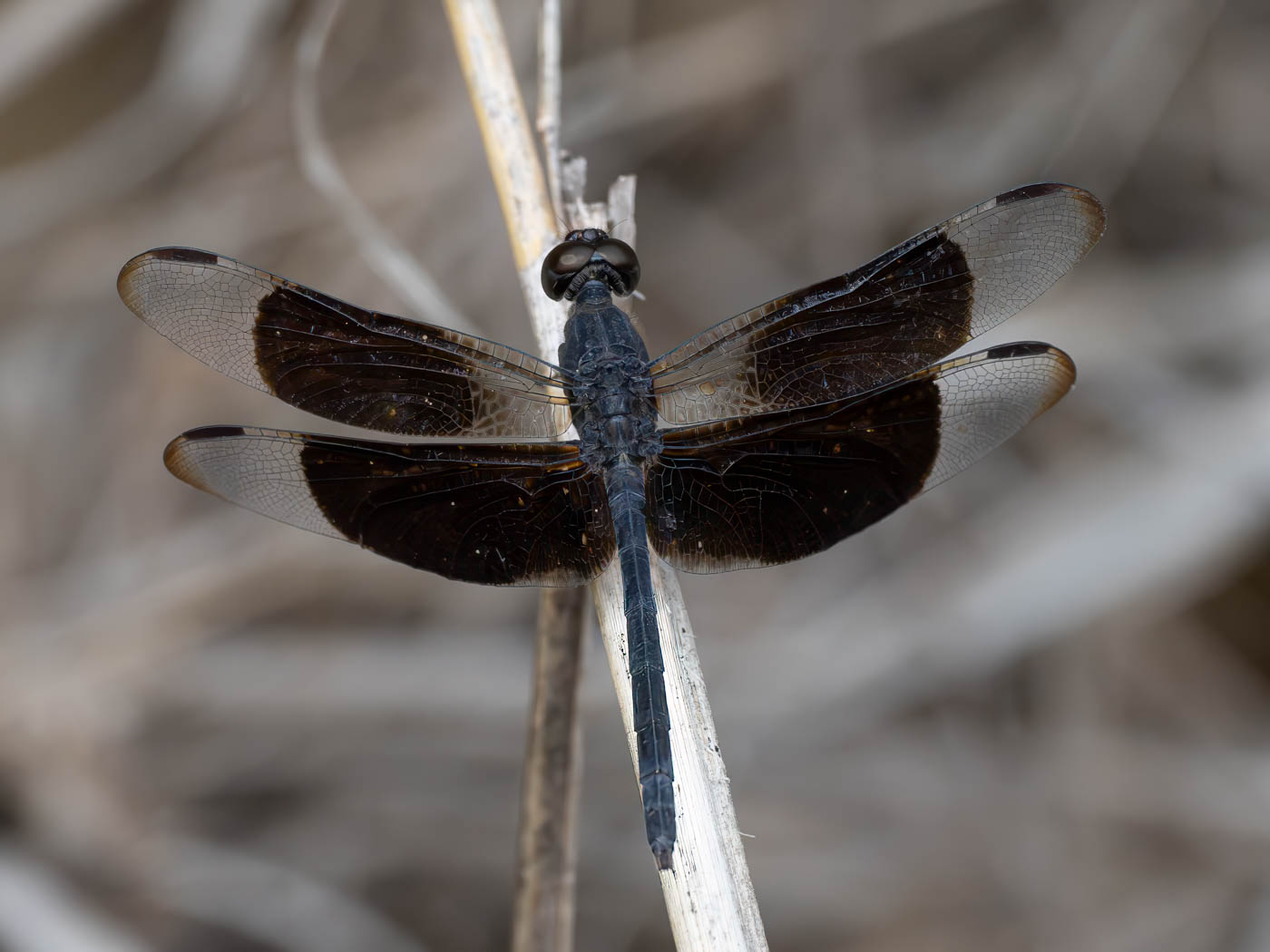 Naturally our approach was punctuated by stops at interesting looking habitat along the road. There were a couple of frequently seen striking dragonfly species which provided frequent opportunities for decent photographs. The first of these, with extensive black patches covering more than half its wings, was the Black-winged Dragonlet (Erythrodiplax funerea). The second, which we saw so frequently that it almost became boring [just kidding] was the very green looking Great Pondhawk (Erythemis vesiculosa).
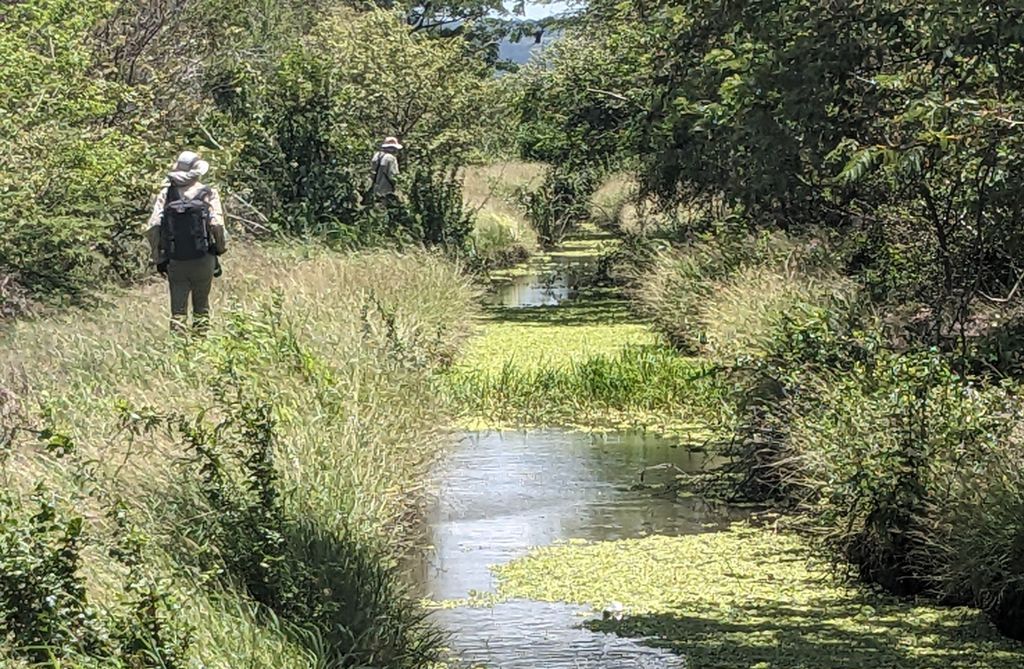 What did we cover, almost 25kms of rough road? When we actually arrived the park was closed “because they were fire-fighting”. Bull***t! We’d have seen smoke and there was none. Mr. Leader said there had been a fire but that was more than a week ago before Herr German and I arrived in Costa Rica. Wouldn’t it have been nice to let us know at the beginning of the road that the park was closed rather than at the end of it? Nonetheless, the habitat outside the park continued to be very productive as we crawled our way back along the gravel making several more stops.
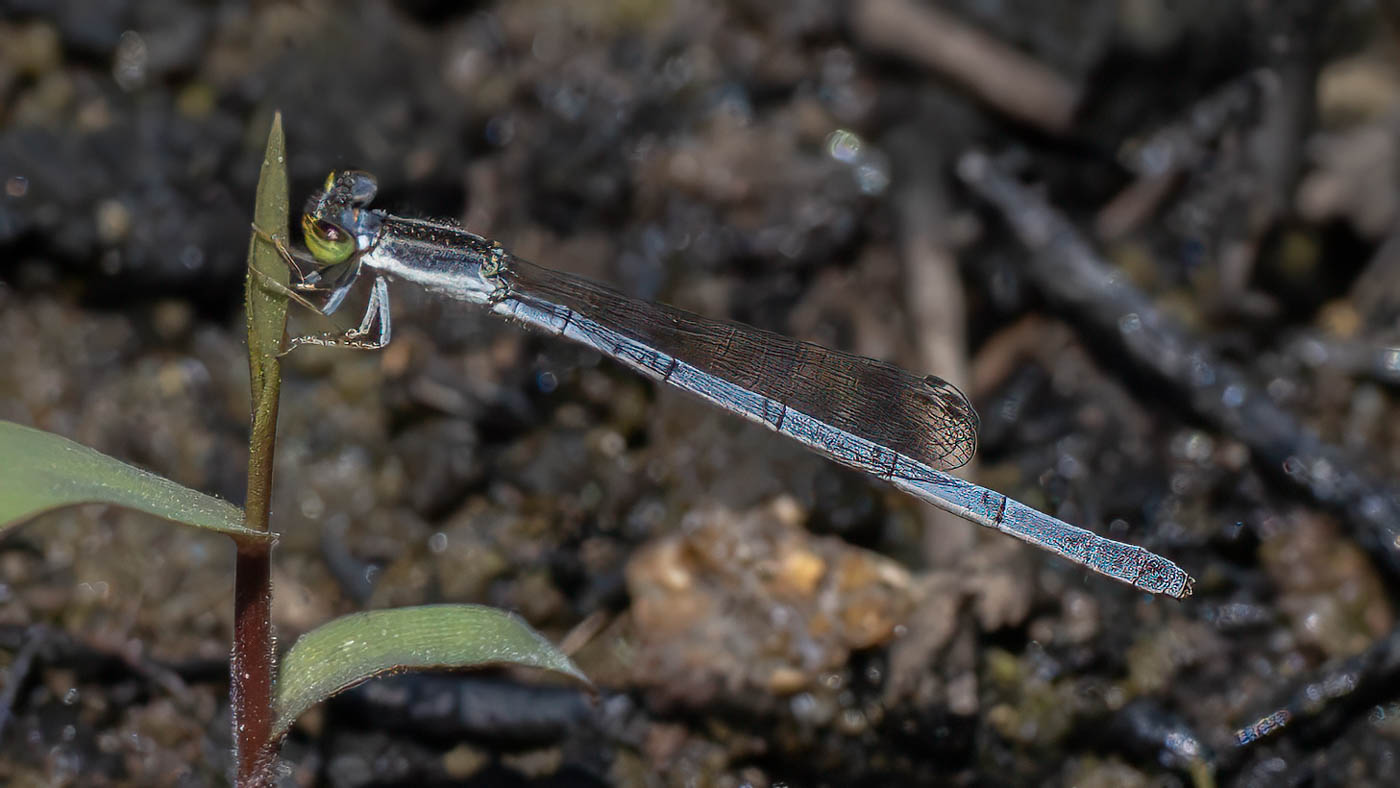 There was one particularly interesting, though slightly frustrating stop on our return. We stumbled into a population of the diminutive and very unusual damselfly, the Citrine Forktail (Ischnura hastata). What is so unusual about it? Well, there is a population of this species on the Azores in our European neck of the woods; a population that reproduces parthenogenically – there are no males. The unfertilized eggs produce only females. All other populations of Citrine Forktail include males and reproduce conventionally. So, I was very grateful to add it to my collection, though mild frustration crept in since I snagged only a mature female.
It was pushing 14:00, way gone beer o’clock and lunch o’clock. We finally regained the real roads and Mr. Leader swung off into a roadside restaurant. It sported a cold cabinet branded “Corona”, a Mexican beer brand, but did not actually sell beer, only soft drinks. My thirst was disappointed. Happily, Costa Rica does a good line in fresh fruit juices. My lunch included a tongue dish, allegedly typically Cost Rican according to my server. I’ve never had tongue hot before. [Keep your comments to yourselves.]
After lunch we continued to our hotel. Or we tried. And failed. We just didn’t see it. We went around again, following the GPS navigation, and failed again. This was very worrying. We called into a restaurant to ask some locals for help and they directed us very confidently to the wrong place – another hotel. “Another hotel”, complete with guard carrying a sidearm, did not know our hotel but let us use their phone for directions. It seems that the location pins on the maps are misplaced, hence satnavs have you chasing your tail.
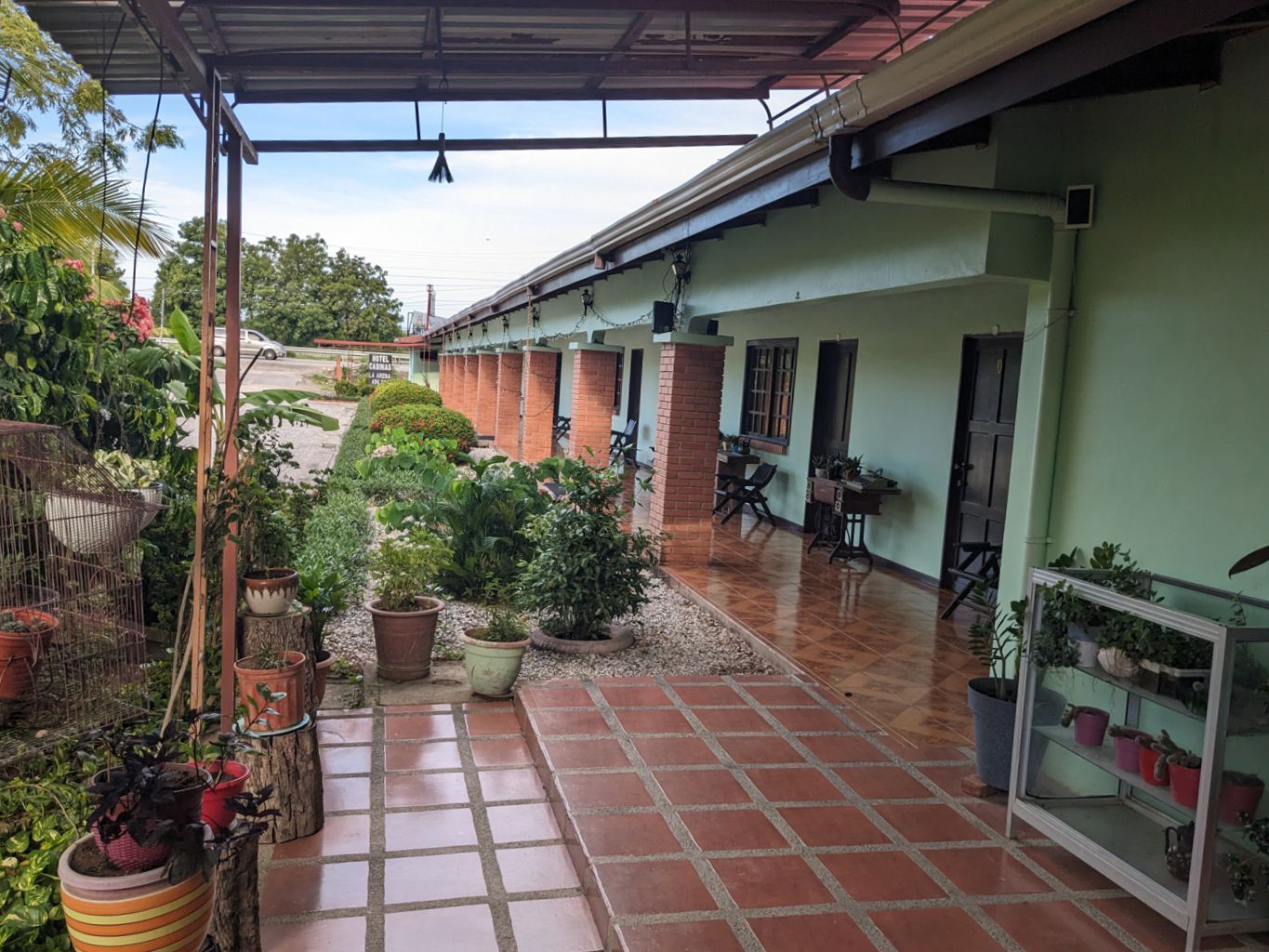 On the third trip around we found our hotel, which is really a motel. It’s run by an expat American which mostly conquered any language barrier. The rooms seem very good with essential air-conditioning given the outside temperature of about 30°C, though we are right on top of a rather noisy main road. Much of the traffic is trucks with their occasional compression braking making a racket.
Our proprietor did not have a supply of cold beer BUT he knew a man who would deliver. We’d been working well over 30°C for half a day and I was desperate so, quite honestly, $22 for a cold 6-pack delivered to your door was good value. There was a fridge in the room to keep it cold, too.
Mr. Leader wants to hit another volcano tomorrow. We’ll see. At least we now know where our rooms are.
Recent Comments