Andalucia: the Alhambra

According to the Rough Guide to Spain, the Alhambra Palace at Granada is:

… one of Spain’s architectural wonders and most visited monuments …

The Alhambra was on Francine’s bucket list so, being only about 90 minutes away by car from Canillas de Albaida, made for an irresistible draw on our day of rest from walking. [Ed: that’s if spending hours on your feet wandering around a large palace can be said to be a rest from walking.]

Planning is necessary. The guide books and visitor advice make it sound a bit like a trial: large crowds, long walk from car parks to entrance, long waits, etc. etc. Entries into the palace building itself are limited and timed with an ability to purchase them online before you go so this, Francine did. Given all the dire warnings and our 90-minute drive, and there still being a choice available (we booked before leaving for Spain), Francine opted to join the 1:00PM swarm. A-day had arrived, we hit the road at around 7:00 AM.

Those familiar with my personal likes and dislikes will have realised that crowds together with a pile of old stones did not make the Alhambra one of my main interests. I was not looking forward to it, except, given those dire warnings, with some trepidation. The journey was fine. As we approached Granada the road climbed into cloud and the temperature dropped to a decidedly chilly 15°C. We were not dressed for 15°C, we were dressed for 25°C. Bother! Fortunately, it did warm up as the day progressed.

Mercifully, since The Alhambra is on the south side of Granada, the direction from which we approached, we didn’t have to mess with too much traffic. The first dire warning came to nought as we easily entered the officially parking areas and made our way to the parking bays nearest to the entrance itself. Given our parking location, the second dire warning was dispatched with a simple 5-minute saunter to the entrance complex where there was a special short line (about 6 people) especially for those with pre-booked tickets – third dire warning dispatched, An armed security guard (normal for Spain – even the caretaker at a little visited monastery had a night stick) soon bad us through where Francine collected our tickets and a map of the site. We were in with nothing approaching hassle. Of course, we were early.

We began with the gardens and the Generalife [I’ve no idea how to pronounce that but it’s apparently the summer pleasure gardens – steady! – of the Emir]. The gardens were OK but even I’ve seen much better. Naturally, though we were early, people were already quite numerous and Francine patiently waited for a few shots without the usual array of dorks armed with tablets, mobile phones and those accursed narcissistic selfie sticks. [Incidentally, tripods are not allowed so why those bloody selfie sticks?] A person or two seemed to help with atmosphere in one or two places.

_MG_7791_MG_7801_MG_7806_MG_7793

_MG_7797The best part of the gardens, IMHO, was that they offered the best view of parts of the Alhambra itself. It is so often the case with notable sites that the best view is not from close quarters but from a distance, where you see better any majesty and in some context. One such view of the Alhambra is from Granada itself, the other is from the gardens. Francine went into another, higher garden while I chose to stay outside looking at the palace and watching the gardeners at work. Incidentally, “Al Hamra” [no, I haven’t misspelt that] is apparently Arabic for “The Red One” so, in addition to “The Alhambra” literally meaning “The The Red One”, I must assume the Moors were red/yellow colour blind. But I digress.

_MG_7845_MG_7827Nothing for it, fairly soon we ran out of garden entertainment and had to wander into the walled fortress itself. I tried to find the outside of the piles of old stones interesting with limited success. There were a few pools/ponds but they were sterile, so no entertainment there. Most interesting to me was a series of large metal rings on the walls outside the Palacio de Carlos V, One of which is shown here. Given the ledge beneath them, I assume these were hitching rings for horses complete with a mounting step. The round courtyard in the centre of this palace was undoubtedly impressive and was drawing several cameras.

_MG_7846_MG_7855We could see one of the earlier swarms queuing ready for their timed entrance to the Palace buildings themselves as we approached the military complex, the Alcazaba [Magicians, this way please], which is where we went next. I must confess that these large slabs were quite impressive. Not only that but they were playing host to swarms of swifts screaming and making the summer sound like summer. I could’ve watched them all day.

I did watch them for a substantial part of the day. We’d finished going “ooh, ahh” at the external stuff way before midday and still had to wait until 1:00 PM for our timed swarm. In fairness, the numbers in any particular swarm are sensibly limited and each 30-minute time slot really isn’t daunting. So, we sat near the entrance, in front of the Alcazaba, and magicked up our picnic lunch – there are restricted areas where you are allowed to eat a picnic – whilst watching all those swifts and Joe Public. Time to join the queue for the main event.

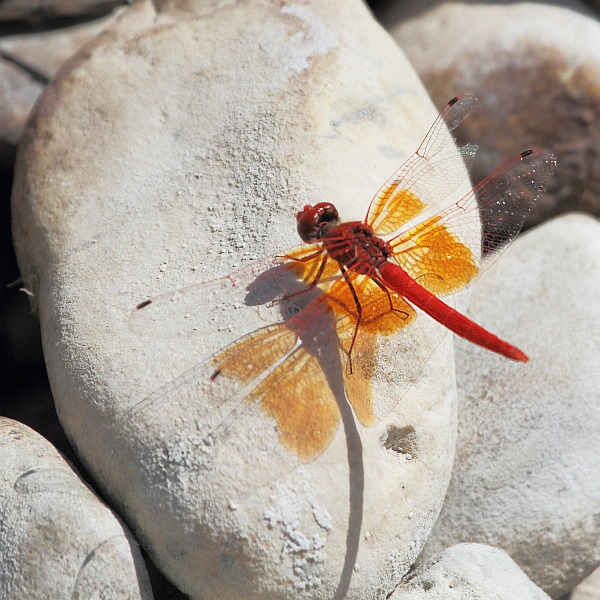
In we went for me once again to feign interest. Being Moorish, the decorative carvings on the walls are very extensive and very intricate, scribblings indecipherable to a non-Arabic speaker/reader. Ceilings and archways were ornate. There was another long pool complete with fish and, surprisingly given the lack of vegetation, an Emperor Dragonfly cruising back and forth. Most of the opposing groups were very polite and considerate, even the oriental ones, which surprised me a little. The only exception was a large-ish Spanish group who seemed to feel as if they owned the place – well, I suppose they did – and who barged their way through with no concern for obstructing others less prepared to barge. Eventually we barged back. Here’s a flavour.

_MG_7889_MG_7892_MG_7897_MG_7913_MG_7916_MG_7925

_MG_7905_MG_7908The most intriguing aspect for me inside was that it sported many gently running water channels in the marble floors. Whether these were to help with cooling or just to sound soothing, I know not. They are best shown emanating from a well known central fountain supported by lion effigies. As with many things, this is difficult to photograph attractively because it’s surrounded by ropes, even though you can’t actually approach it. So, here is the fountain, first to see some of the water channelling and secondly to look more appealing.

Although entrance to the palace itself is timed, you appear to be able to spend as long as you like in there. Fortunately, there are limits and we eventually exited to make our way back.

_MG_7822OK, I admit it, it was nothing like as daunting as I had been led to expect and I’m glad I’ve seen it. I do think it’s a little over-played, though but, hey, what monument isn’t? Well, the Taj Mahal, perhaps?

Technorati Tags: ,,,
Posted in 2016-05, Spain

Andalucia: Canillas de Albaida

_MG_7606_MG_7758All our previous Explore trips have been spent at several locations but this was a so-called centre-based trip at a single hotel for the duration. Here it is, on the left side of this square. On the right of the square is an associated restaurant run by the hotel owner, Gustavo. Prior to arriving at Canillas de Albaida, we had asked Explore if there’d be somewhere to park. “We can arrange for parking”, was roughly their reply. However, if you look to the other end of the square, behind that camera position, as it were, you’ll see the only potential entry point  to the square with a vehicle. In essence, you cannot get to the hotel except on foot. So, we had to find somewhere to park first. Fortunately we did and we were slightly less impressed than usual with Explore’s information. Of course, this really only becomes an issue for those booking “land only” to get there under their own steam. At some of the corners, the classic white walls of an Andalucian village become adorned with automotive paints of various colours from slightly less cautious tourists.

Gustavo was a colourful character. he seemed to have a different pair of glasses to match each of his outfits, all seemingly consisting of a Desigual designer top. Or maybe it was just one for each day of the week? Despite his Spanish designer attire, he’s the worst paella cook I’ve ever come across. One evening supposedly featured a paella lesson in the square. In fact, the sofrito for the paella had been pre-prepared indoors and all that happened outside was to have the rice, stock and a few bits of seafood added, all without commentary. It didn’t even reach the dizzy heights of a demonstration, far less a lesson. My taste buds swiftly detected that this paella had also been given its classic yellow colour using turmeric rather than saffron [turmeric cheap, saffron expensive] and the rice remained undercooked and chalky – not al dente but chalky. I wouldn’t have served it to friends, far less paying guests. Fortunately, Gustavo isn’t actually the chef and the remaining food we had there was OK.

_MG_7626_MG_7781As cute as a hillside Andalucian village is, we were left thinking it wasn’t a place for the infirm. I’m sure we’d have become more used to it but walking anywhere very soon requires ascending a 30° slope. Here’s a couple of shots with an obvious horizontal to give you an idea. These slopes set our hearts pumping and our lungs straining. One morning we were exiting the village downhill when an elderly lady with bow legs and a walking stick went passed us in the opposite direction, uphill. Well, maybe it isn’t so bad after all; maybe it just keeps them going.

_MG_7776The locals were not quite so nervous of these narrow streets that are so unforgiving to car bodywork; some of the streets actually were passable by car. Mind you, the Spanish in general seem to adopt a laissez-faire attitude to their vehicles whereas we tend to blanch at any first minor scratch, even when a car is approaching 10 years old. The parking in such a village is necessarily rather free form.

_MG_7777_MG_7763_MG_7770As with many places, the cover of darkness with the added atmosphere of electric light illumination can show places to best effect. [Notable exception: Luton, which can’t look good in anything other than total darkness.]  So, here’s a few more shots from Francine’s night time wander around Canillas.

Given the fact the we’d driven to this adventure and needed to pick our car up again afterwards, staying in one place was useful. However, I think for any future trips we’ll prefer the move on as you go approach and adopt a more traditional approach.

Posted in 2016-05, Spain

Andalucia: the Fauna

Fauna, it has to be said, had been notable mostly by its scarcity back up in Jalón prior to our Andalucian visit. Dragonflies had proved particularly difficult to find, despite my best efforts. Also, rather curiously since we had quite a crop of Red Valerian behind Casa Libélule, Butterflies had been scarce. Lugging a camera and specially purchased 18-300 travel lens with me on hot days up gradients, I was hoping to do a little better. Things weren’t looking good to begin with, though.

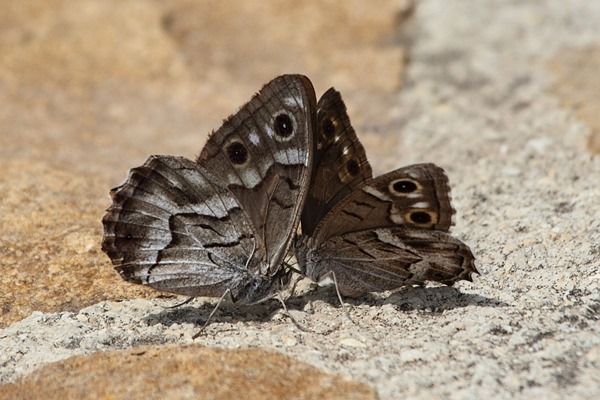
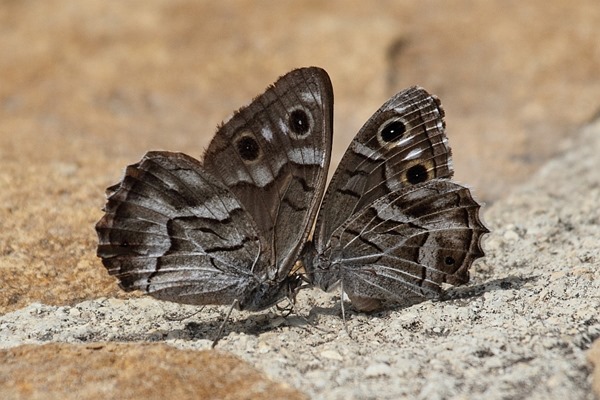
IMG_0751 Spanish GatekeeperThere were certainly a good number of Spanish Gatekeepers (Pyronia bathseba) flitting about and, once I mentioned them, a few other folks began to take a little more notice. We’d seen them in southern France before, which is the only reason I recognized them. Things were a bit slow, though. At one point, we saw a positive swarm of them – there must’ve been 50 – feeding on a low mass of small flowers beside one of those all-too-frequent stony 4×4 tracks.

J16_0130 AscalaphidThey remained slow until on one walk I saw a flying insect shoot away from me quite quickly. I thought I saw a flash of yellow and formed a suspicion but it’d gone. On a later walk, I saw the same thing again but this time for longer and it had company. My suspicions were confirmed, my flash of yellow had been an Ascalaphid. These are fast flying relatives of the Ant-lions and really are completely fabulous. We’d encountered them only once before in Southern France. I was hoping that these in Spain might be a different species but, alas, I fear they were the same as those we’d seen in France, Libeloides coccajus.

J16_0131 IbexWe’d been warned by our leader to keep our eyes peeled for wild boar and/or Ibex but nobody spotted anything. At least, not until we were on our best walk up to the summit of Cerro Verde. About half way up, our leader, Mick, stopped; his eyes were attuned to watching for these beasts and he’d seen a couple of Ibex standing on a rock part way down our hillside. They were at some distance but at least we got a reasonable record shot of one of them.

_MG_7960 Spiny footed lizard_MG_7961 Psammodromus algirusOnce at the top of Cerro Verde re-stoking the boilers with our lunches, we were entertained by a couple of lizards, one of which had a very fetching long red tail. This rejoices in the name of a Spiny-footed Lizard (Acanthodactylus erithrurus) whilst its plainer but also delightful friend was Psammodromus  algirus (or words to that effect).

J16_0137 Spanish FestoonEver since my association with Spain, there’s a butterfly that I’ve wanted desperately to see but we’d not been there until now during its main flight season. Now we were and my fingers were very firmly crossed. This made holding the walking poles very difficult. Not only that but it didn’t appear to be working. It continued not to work right up until our final walk to Sayalonga. Finally, as we descended a hillside before, of course, having to struggle up again to our target village, my target came into view and settled on some trackside flowers. Not the greatest of shots but it WAS a Spanish Festoon (Zerynthia rumina); they do always seem to sit with wings shut. This alone made all that lugging of a camera up and down completely worthwhile.

We did see a couple of Booted Eagles (Aquila pennata) but they were flying too high in a blue sky for our pictures to be of any use other than for identification, and only just at that. Still, oh that butterfly!

Posted in 2016-05, Spain

Andalucia: the Flora

As I mentioned previously, I wasn’t a great fan of trudging along, especially up, wide stone 4×4 tracks in the mountains but it give Francine some good views of the flora and gave her time to pause without getting lost – the group would still be in sight.

Actually, we were really lucky having flowers to look at; our leader, Mick, told us that they’d normally be over at this time of year but some heavy and persistent rain two weeks earlier had prolonged the flowering season.

_MG_7737 Rusty FoxgloveGoing into a lot of wordy detail is probably not a great idea and, where I’m concerned being a non-botanist, probably not possible. I will highlight one, though. Back up in Jalon, before we came down to Andalucia, on one of our “training” walks Francine had seen a Spanish Rusty Foxglove (Digitalis obscura). She’d meant to return to photograph it but didn’t quite make it. Fortunately, we came across another little outcrop of them on one of our walks here so she got it in the end.

A few other plants made an impression, including a particularly attractive Bugloss (like Viper’s Bugloss – Echium sp), many utterly delightful Spanish Irises (Iris xiphium), a Toadflax that Francine thinks is Linaria aeruginea and some large yellow thistles that are a little more elusive but a Carthamus sp.

_MG_7637 Echium sp_MG_7643 Spanish Iris_MG_7646 Linaria aeruginea (Toadflax)_MG_7725 Carthamus sp -  Yellow Thistle

To give a feel for the overall views of the countryside floral environment, here’s a few general shots to feast your eyes on.

_MG_7657_MG_7716 Poppies_MG_8000_MG_8012

It was all quite delightful and we were very lucky to see a display that really should’ve been over by the time we were there. We’re very glad it wasn’t.

Posted in 2016-05, Spain

Andalucia: the Walking

This was our 10th trip with Explore!, many of which have been walking trips, though a few were more cultural (e.g Thailand, Peru). This trip was centre based, in the white Andalucian village of Canillas de Albaida, whereas some trips change accommodation as you move along a route. The 5 walks themselves were in [if you can just stick with this title] the Parque Natural de las Sierras de Tejeda, Almijara y Alhama. How’s that for a mouthful?

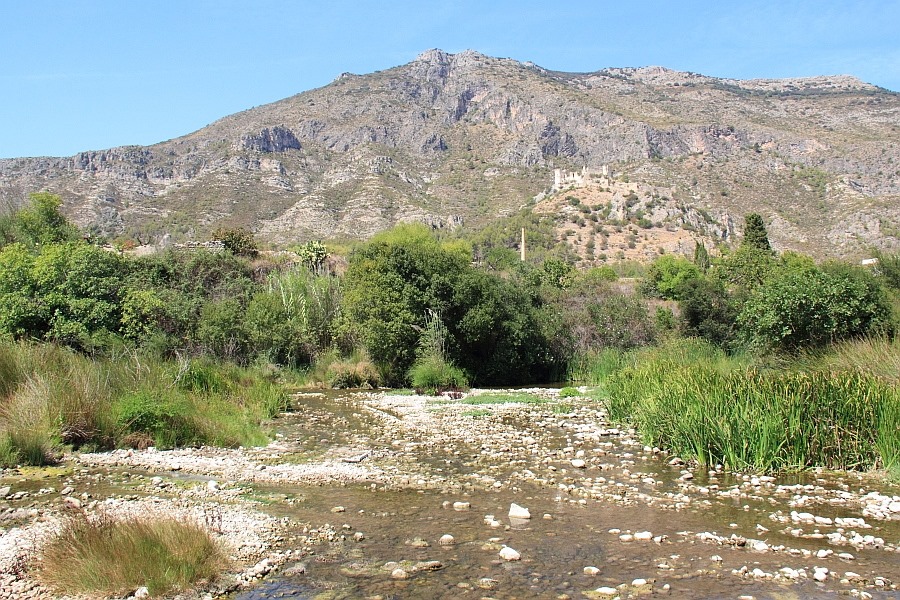
J16_0133 Canillas de AlbaidaThe walking here was graded as moderate which, depending upon ones fitness, of course, could be regarded as reasonably serious. As you can see from this picture (that’s Canillas de Albaida in the centre), Andalucia really doesn’t do flat, you’re either going up or down and, as most walkers know, down can be as energetic as up. Since, in addition to all the water we needed, we were lugging proper camera kit up and down the lumps, we thought we really should use it. To give an idea, at least to UK readers, our longest (and best) walk was a bit like walking up Snowdon (not the more gentle tourist track though). except that Snowdon rarely reaches the 25-30°C of Andalucia.

stone track 1stone track 2Now to the nitty-gritty. In my view, though, this was the weakest of the 10 trips that we’ve been on with Explore. That’s not as bad as it may sound because the standard of all the other trips has been very good. So, what was it that makes me call it weaker? Well, once on an actual footpath, the walking was fine but, in my opinion, there were far too many sections of road, either tarmac or wide, stony 4×4 tracks needed to link the enjoyable sections together. Here’s a couple of shots showing what I mean. There was an up side to these tracks, though, because Francine was able to see, pause, study and photograph the wild flowers en route (but more of this in another post).

footpathriver crossingOnce we got onto the the bona fide footpaths, they were fine and enjoyable, although care and walking poles were needed to maintain ones footing on loose, dry material, largely stones, which can be likened to walking on marbles. We even had some fun criss-crossing a river – sticks really are handy dealing with slippery rocks underfoot – on the way up to the summit of Cerro Verde which, BTW, we considered to be the most enjoyable walk. This is much more what I was looking/hoping for.

Bodega tableOn a couple of the walks we called in to a local bar or bodega for a tapas lunch. These were universally excellent, particularly our bodega visit where we were introduced to a series of local sweet wine specialities. the bodega had an intriguing grape press which operated upwards with a ram driven by hydraulic power – very counter-intuitive.

So all in all, generally enjoyable but falling short of brilliant. Pretty, though.

Andalucia: tick.

Posted in 2016-05, Spain

Andalucia: the Arrival

Almeria tarpsWe left the Spanish desert and its fake Paella Western sets in Olé-wood behind us and headed for Almería on the south coast of Spain. We like deserts and driving through that was quite interesting. Then we hit the south coast autovia and soon discovered that Almería looked far less inviting. It has to be said that it wasn’t best presented. Most of the hillsides overlooking the road are smothered in light grey plastic netting. I think this is a sort of shading material for the acres of tomatoes being grown underneath.

This must have been a very expensive autovia to build. We drove through about a dozen tunnels and when we weren’t driving through a tunnel we seemed to be crossing yet another lengthy viaduct. What I was having trouble with was working out why some of the tunnels displayed an 80KPH speed limit whilst others allowed 100KPH. Curious. I’m sure there was some Spanish logic there somewhere. Nah, you’re right. 😉 Sally Satnav didn’t know the speed limits either because, despite having updated our maps prior to our trip, Sally Satnav knew nothing of one major section of this autovia; we were decidedly off-piste.

Andalucian villasEventually we re-joined Garmin’s mapped world in time to leave the autovia and head north for 30 minutes up one of the twistiest roads I’ve ever driven. The views of villas on the hillside were pleasant for the passenger, the only one who could take her eyes off the road to look, though.

Watching the world go byWe came to what appeared to be the col and lo, there was one parking space for us to take a breather. Sod the breather, there was also a bar with beer and tapas and locals sitting outside in the Andalucian sun. Well, it would be rude not to join them and there was a table still free. We sat with drinks and tapas and prepared to watch the world go by. When the world did go by, the world consisted of a herd of goats which swarmed past our table just a few centimetres away liberally scattering goat droppings as they went. What a colourful introduction to Andalucia.

Refreshment over, colourful soon became the order of the day, in that the air turned blue. The Garmin antichrist struck again. We were heading for Canillas de Albaida, a typically white Andalucian village dripping down the side of a mountain. Sally Satnav now took it upon herself to send us deep into the heart of the village just over the col, down twisting, steep roads just about wide enough for a car IF you folded in the wing mirrors. Wedged in such a gap, we ended up faced with a 135° left turn. Enter: blue air. After cursing profusely, I used a couple of other steep narrow roads opposite at the same “crossroad” to do an about face. Half way through my manoeuvre, I had to wait for a local to use the same roads to shuffle his way around the 135° turn – apparently this was normal behaviour. Eventually I was facing back the way I’d been directed and retraced my way back up the same narrow street, wing mirrors still folded in, praying that I didn’t meet another local heading for the same 135° turn.

I didn’t. I folded the wing mirrors back out again and made for the sensible 2-lane road around the outside of the village. We’d initially assumed that we were plunging into the heart of Canillas de Albaida, our destination, but no, this, we discovered, was Cómpeta, the larger town before our destination. Sally just thought she’d ignore the good road and take a short cut through the middle of it.

Satnavs really are barkingly stupid at times and, I’ve decided, are particularly useless in Spain. They’re fine on main roads but you don’t need them on main roads where a Francine, a map and a brain are more than sufficient. Some roads, it seems to me, should be flagged “avoid unless this is your ultimate destination”. How difficult would that be? There are many such roads in Spanish villages which should be studiously avoided unless you’re actually going there.

After a further few kilometres on the Garmin-disliked decent road, we did enter Canillas de Albaida. The hotel address proved useless – we were being plunged into another “maize of twisting turning passages, all the same” [remember the Adventure computer game?] but were wary now and decided to bail out. Mercifully we stumbled across a square with parking spaces, one of which was free. We took to our feet with Sally Satnav muttering “in 50 metres turn left”, much to the amusement of the locals. More by luck than technology, we finally found our hotel and downed yet more beers while we awaited the arrival from Malaga airport of our travelling companions.

And relax …

Posted in 2016-05, Spain

Olé-wood

Our main event for this visit to Spain is our Andalucian Moorish Trails walking week with Explore!. Our ultimate destination, Canillas de Albaida, is about 350 miles away, roughly southwest, so we could do it in a day if we wanted but we thought we’d supplement our adventure by stopping en route somewhere.

Once in new territory for us and with lunch time approaching, we veered off the autovia thinking we might look for lunch in a town called Lorca. Lorca proved to be a bit bigger than we anticipated and, other than traffic lights, we found little to delay us so we veered back onto the autovia again. Not the best of starts for amateur Spanish travellers.

Huercal OveraFrancine looked for a smaller blob on her map and found one rejoicing in the name of Huercal Overa. We veered off to try our luck again. Not only did we find street parking but the street parking was conveniently close to the main square, for those with legs and not afraid to stretch them. Even amateurs know that the most likely place to find bars with refreshments and umbrellas is the main square. We picked one of three or so available and had two tapas washed down by a beer each for a whole 5€. Not only that but one of the tapas on offer was caracoles [snails].Better! If I’m perfectly honest, the snails were rather too salty, even for a fully signed up member of the salt party such as myself. Still, it had to be done and it did tick the “local colour” box.

Salty snails over and back on the autovia, we began heading inland for the dessert. BTW, it appears that the toll motorways are called autopistas, whereas the free ones are called autovias. South of Alicante, they’re all autovias. With our mix of languages around Jalon, I’d been incorrectly assuming we’d been dealing with a language difference between Castilian and Valenciana.

_MG_7597So, why was this European dessert attracting our attention in particular? Well, this is where those delightful Clint Eastwood Spaghetti Westerns were filmed, along with a fistful of others [sorry, couldn’t resist it]. Nestling up against the various fake Hollywood film sets is a town called Tabernas where Francine had booked us a room for the night at a Casa Rural called Jardin del Desierto. Miraculously, Sally Satnav found it for us via a relatively sensible route – just one farm track to be avoided. We checked in and paid 10€ to park our car in a private garage instead of on the narrow streets.

TabernasIt’s difficult to avoid the western motifs as you wander around the town, which is essentially one long street. There were no horses hitched to rails outside bars, though, regrettably. In need of refreshment, we picked one shady, horse-free bar to wash the dust out of our throats, listening to a blaring TV inside which was impressing on us the western heritage of our location.

Forecourt-restaurantWhilst there were several bars that would be offering tapas in the evening – come on, Clint, let’s grab a shot of red-eye and some sepia or albondigas – restaurants, as such, seemed scarce. Our delightful hosts at the casa rural had indicated just two restaurants which were more or less side by side at the north end of town, up by the fuel station. In the early evening, we wandered up to find them. One of the two was closed so it looked like Hobson’s choice. Unpromising as it looked, with the outside tables overlooking the petrol station forecourt, we filled our bellies with excellent food while we watched people filling their cars for a little entertainment. Do I know how to show a girl a good time, or what?

Skipped restaurantOn our way back, we noticed another option, though it may have offered only tapas for all I know. These would’ve been consumed sitting beside a builder’s skip. In the unlikely event of the food being rubbish, that could come in quite handy.

I can’t help but feel that the films might’ve celebrated the location rather than the money and been called Paella Westerns, instead. I certainly think Tabernas should be renamed Olé-wood.

Posted in 2016-05, Spain

Senija Cross and Cova Garganta

Several years ago, while we were looking after el perrito in Jalón, Francine and I found what looked like a modest walking route starting from Senija, one of the Spanish villages close by. The walk climbed a hill behind Senija  a hill which, in common with quite a few hills in Spain, is topped by a cross. The Spanish definitely enjoy putting crosses on hilltops. The walk then continued down to the cova garganta, the giant’s cave, overlooking the A7 autopista.

Things went well to begin with; despite someone having chosen to mark the path with circles of yellow paint on rocks. The difficulty with this is that there are yellow lichens which tend to grow in a circular pattern. Nonetheless, we avoided a few confusing splodges and found our way to the cross.

After this things went horribly and inexplicably wrong. We certainly set out on the path towards the cave but ended up descending a rough scree slope with no sign of any cave, giant’s or otherwise. We’d ended up quite low down near the autopista and somehow managed to work our way back to our start point in Senija. Failed!

So, when the Costa Blanca Mountain Walkers promoted a Saturday walk taking in the route we should have followed, I was keen to join in, hoping that I’d find out where Francine and i had gone astray.Unfortunately, Francine had pulled a muscle in her back so dipped out. I joined in on my own.

My walking companions were mightily amused by my tale of failing to find the cave and ending up almost beside the autopista instead. Still, they took pity on a poor learner and, once we were atop the summit at the cross, carefully showed me the correct route to get to the cave. It was a bit of a scramble at one point. Exactly where Francine and I had gone astray, I couldn’t precisely remember, many bottles of rosado having dulled the memory, but I think I  could now find it again. It was quite an impressive cave, too. I really expected to see piles of bat droppings in it but I didn’t, and there seemed to be no strong smell such as might accompany deposits. Here’s a couple of phone camera shots, just to prove I eventually got there

Cova Garganta 1Cova Garganta 2

Once back for a refreshing beer, the leader suggested that I could, perhaps, lead the walk next time. “Not unless you want to end up down near the autopista”, I replied.

Technorati Tags: ,,,
Posted in 2016-05, Spain

Benigembla Stroll

We were continuing our familiarization with the Costa Blanca Mountain Walkers terminology today, as well as continuing our exercise in preparation for our impending Andalucian walking trip with Explore!. Overhearing a few conversations between longer standing members of the CBMW, they are having a little trouble with “easier” walks, where easier seems to be defined as that which is possible by a human, without the need to be a mountain goat. Today, they were advertising a Benigembla Stroll, Benigembla [pronounce it Benichembla and you’ll be close enough for an Anglo-Saxon] being a village a little further up the Vall de Pop from us. We popped off to join in for a relaxed 10:30 start.

Once assembled, we sauntered out of the village on the flat. Very soon, though, we turned right and headed up. We continued up for about the next hour. The walk had been described along the lines of a walk around the Benigembla bowl, which did sound gentle. Far too gentle, I suspect – quite clearly we were heading for the rim of the bowl, or close to it. It was pleasant enough though, and nothing anywhere near as strenuous as the Col de Rates assault which left legs screaming. Our second hour continued the circuit and descended back into Benigembla.

‘T was a good wander but still caused the lungs to puff on the inclines. The CBMW brigade continued their emphasis on the “M”. Most walkers repaired to a local restaurant, as usual, for a menu del dia lunch. Francine and I dipped out. Menus del dia are excellent value but simply too much food for our tastes in the middle of the day.

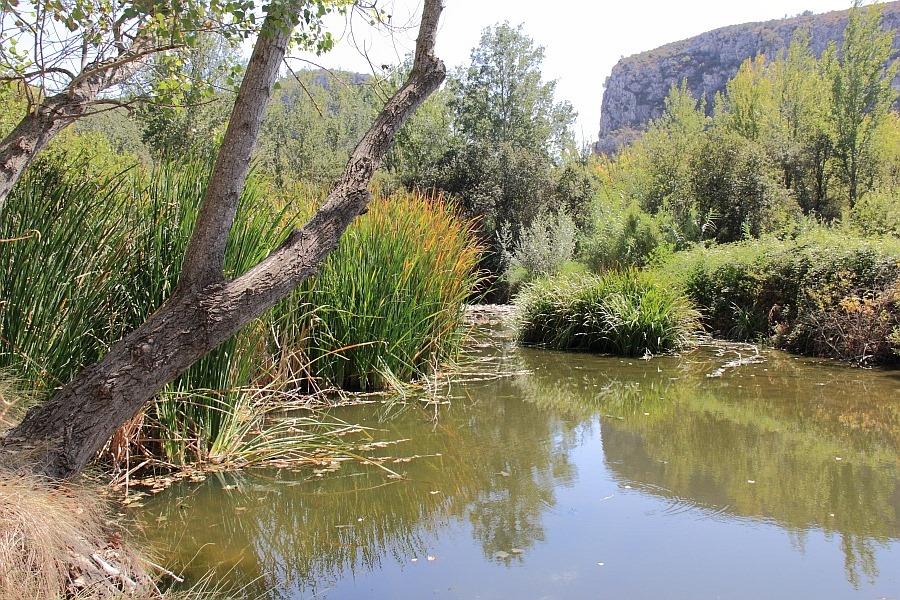
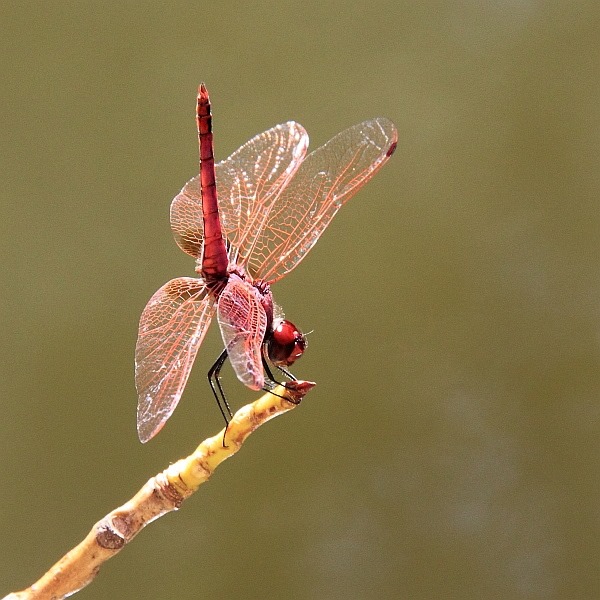
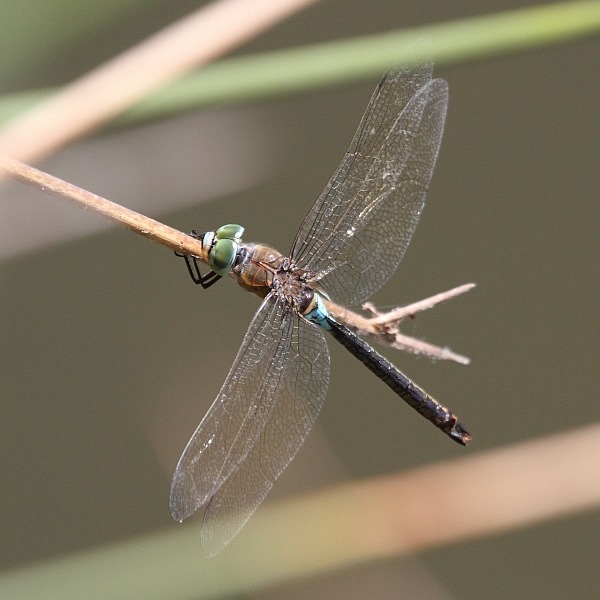
J16_0091 Blue EmperorJ16_0094 Ovipositing Emperor and guestInstead, the sun was out and we tried our luck Odo-hunting at a couple of new pools in a different location along the local river at Alcalalí. Our meagre haul amounted to a couple of uncooperative Red-veined Darters (Sympetrum fonscolombii) – uncooperative in that they were posing only on the ground – and an Emperor (Anax imperator),  which did at least offer a chance of a flight shot. A female also put on an ovipositing display, which I snagged. Only back at home base did I notice that my ovipositing shot included a resting Bluetail (Ischnura sp). It’s amazing how the mind focuses.

The dragonfly situation is depressing; I’m seeing hardly anything and there appears to be more action back in the UK. I can’t work out what’s going on.

Posted in 2016-05, Spain

Els Arcs

We’ve done quite a few walking trips (8-ish) in small groups organized by Explore! – up to 16 folks and a leader in each group. Now we’ve been out a couple of times in similar sized groups with the Costa Blanca Mountain Walkers. For those interested in taking their time to photograph either scenery, in a considered fashion, or wildlife in a patient fashion, depending on the lack of cooperation of the critter, is that you simply don’t have time. Given a “proper” camera, by the time you’ve extracted it, thought about your shot, lined it up and pressed the shutter in an unhurried way, the rest of the group will be about 100m ahead. Wait for a butterfly to settle, or think longer about a landscape shot and you’re even further behind. Oh, and you have to put the cmaera away again, as well.

Francine had read about a walk involving “Els Arcs”, a couple of natural rock arches, which was supposedly a decent place to find orchids. The thought of doing a walk by ourselves in our own time was quite appealing. The walk sounded relatively straightforward, certainly by Spanish standards, with a start point just beyond Castel de Castels, about 30 minutes further up our valley We set off looking forward to time by ourselves.

We parked at the start of the track. Before I was ready, still preparing my rucksack, Francine had found a Bee Orchid in the rough ground by the “Usted esta aqui” [You are here] map. We set off up the track.

_MG_7528Very soon an fabulous critter crawled quickly across the track in front of us. It was black with striking red bands across its abdomen and had trouble hauling its bulk up some of the stones. Beetle sprang to mind but it looked more the shape of a larva than a fully grown beetle. It was big, though, at about 3cms long. Francine’s swift search on the Internet back at home base quickly revealed our critter to be a red-striped Oil Beetle (Berberomeloe majalis). This is a full-grown one – they’re wingless.

_MG_7542Continuing our path we played leapfrog with a Dutch family, alternately in a car and then walking. Where the track eventually became a footpath, they had to abandon their car and let their two blasted King Charles Spaniels run along the path disturbing any wildlife. fortunately they were slower than us – the people, not the spaniels – and we managed to give ‘em the slip. The “easy” path became a little more Spanish, rough and a tad slippery, as we approached Els Arcs themselves Unless you’re looking at, it takes a while to realize that you’ve arrived. Eventually, though, you see sky and the ground beyond through the two arches. It’s quite a spectacular natural formation.

The slightly trickier path to the arches is a “there and back” side-excursion from the circular route. we retraced our steps to regain the main track.

_MG_7555Approaching the end Francine found her highlight. Nestling beside the rough road in a patch of grass she spotted what looked like an orchid, yellow in colour. I know just what she felt like. This was a new orchid ofr her collection and I’ve been similarly excited when I first see a dragonfly that’s new to me. She knelt and snapped away, incurring a blood-letting injury for her pains. The bleeding soon stopped and we returned for her to consult the books. It’s pretty self-descriptive, really: it looked like an Ophrys and it was yellow – a Yellow Ophrys (Ophrys lutea).

It had been very pleasant being able to take our time over what we wanted to do, and we’d got a new orchid, to boot.

Posted in 2016-05, Spain