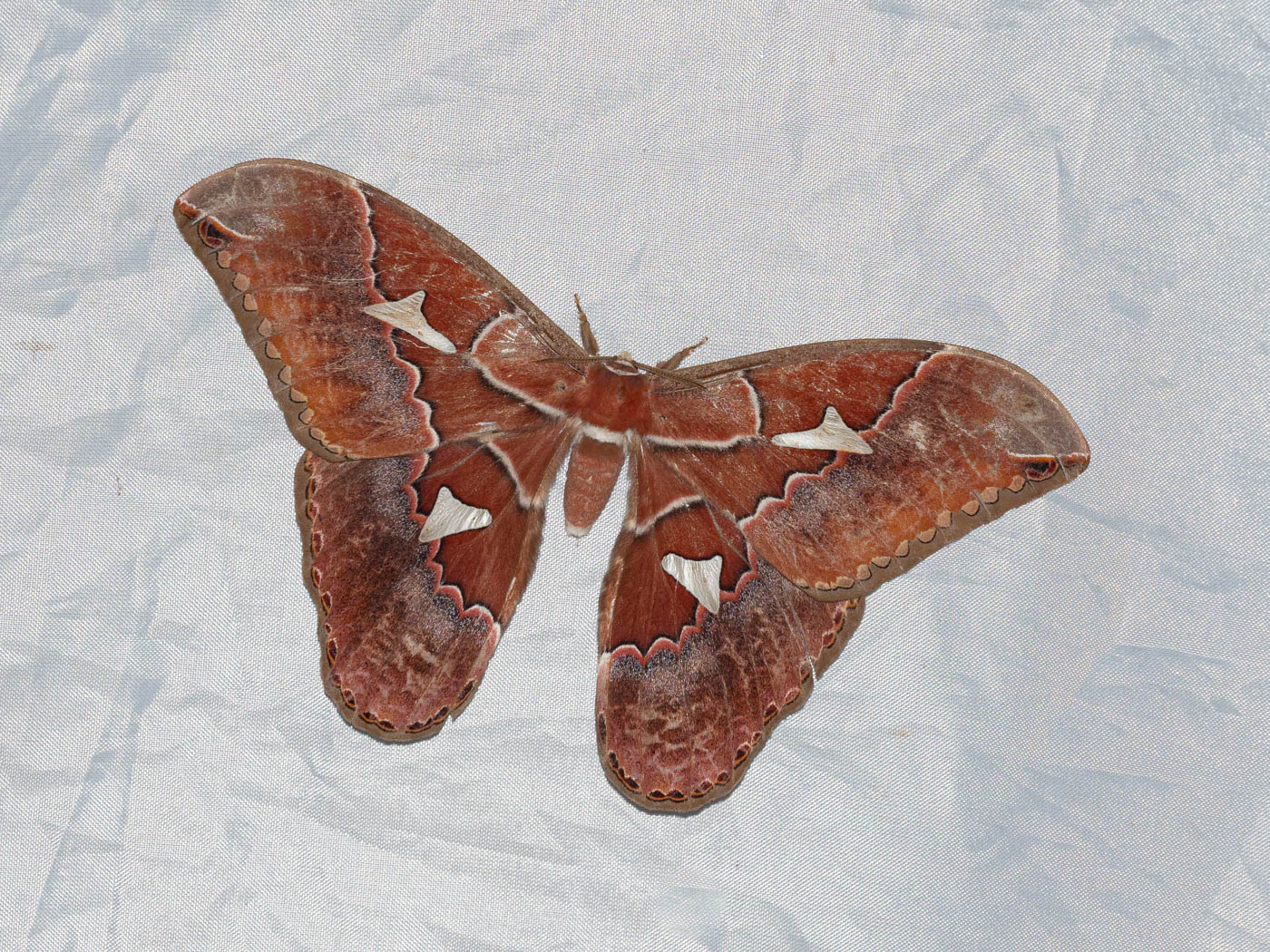
This morning we bad farewell to La Selva. Before we could leave, though, Mr. Leader had to pack up his moth trap. Well, I call it a trap but it isn’t a trap in the conventional sense. What it is is a 1½m-high white fabric Ikea “wardrobe” supported by a collapsible frame. Inside this Mr. Leader places a blue light to attract the moths which then sit on the outside of the material. I really can’t believe he travels with it but he’s very keen on mothing. This morning, stuck contentedly to the outside of the fabric, was an enormous Rothschild’s Silk Moth with an impressive wingspan approaching 15cms/6ins – it’s the size of a side plate. What a magnificent insect.
Moth trap safely stowed, after another decent breakfast with the now standard Gallo Pinto we handed our keys in and hit the road. Mr. Leader’s first stop was another wildlife area: Tirimbina Biological Reserve. It was en route to our next overnight.
Naturally, Mr. Leader had this place on our itinerary for a specific dragonfly. He likes to find rarities for his clients but everything I see here is new to me so I’m more than content with whatever turns up.
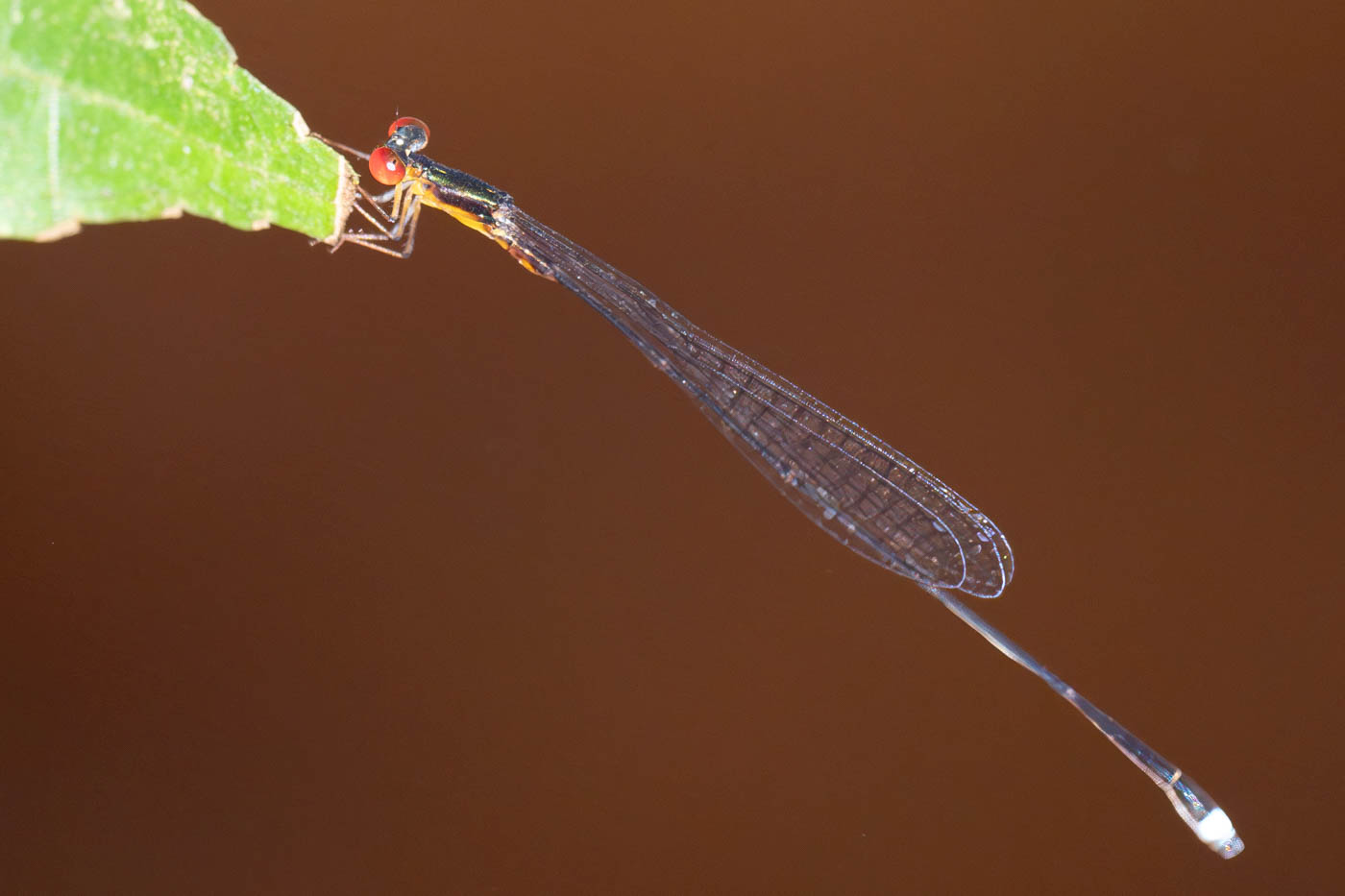
We paid our entry fee and hit the reserve stopping first to examine the so-called Frog Ponds. I wasn’t sure if these were the poison frogs but they’re the only frogs we’ve seen so far. We didn’t see frogs at the pools but we certainly did on the way to them. The pools did produce a few interesting damsels, though; this is a particularly attractive Wispy Threadtail (Psaironeura angeloi).
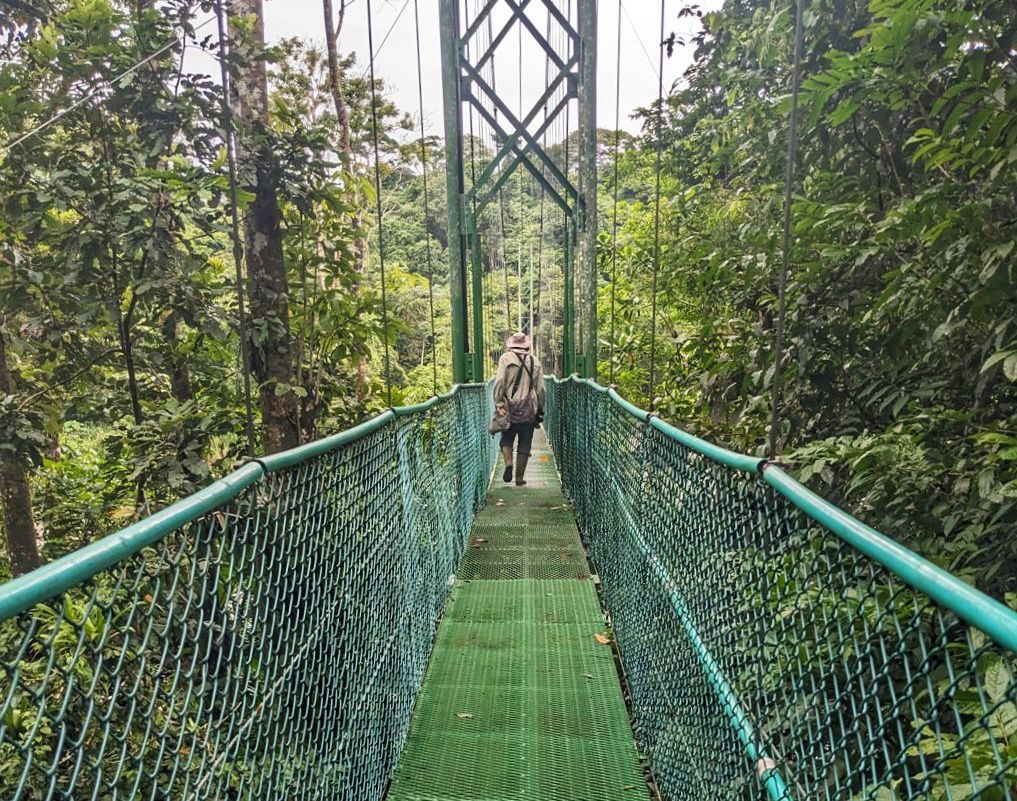 Following on from the ponds we had to cross a very long, rather shaky suspension bridge over the wide, raging Sarapiqui River, the river that we knew from La Selva. Half way across the bridge Mr. Leader was gutted ‘cos the spiral stairs leading down off the bridge to a central stone and gravel beach/sandbar, was closed to the public. I got the impression he had been down on a previous visit but there were officials around this time.
On the far side of the river we bumped into a researcher that Mr. Leader knew from one of his previous trips. This kind chap directed us to a swamp area, new to Mr. Leader, that he said was good odonata territory. Well, that’s a red rag to a bull – we set off.
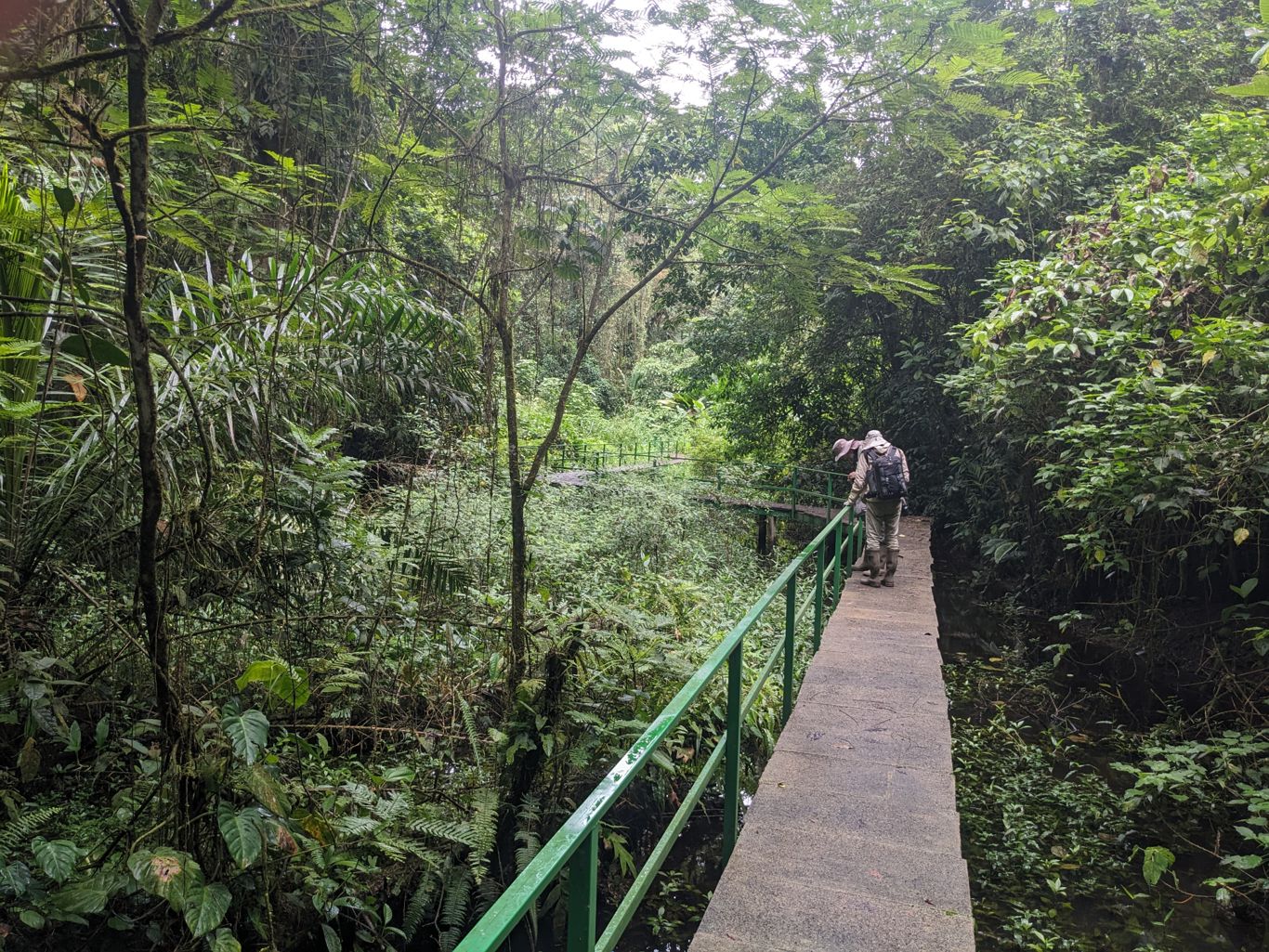 Arriving, we found a well constructed boardwalk traversing the swamp. The weather wasn’t yet the best but we spent a contented hour or so waiting for brighter interludes in the weather, snapping away when we could as well as fishing Mr. Leader’s lens cap out of the water. At least it’s not just me that is prone to dropping things.
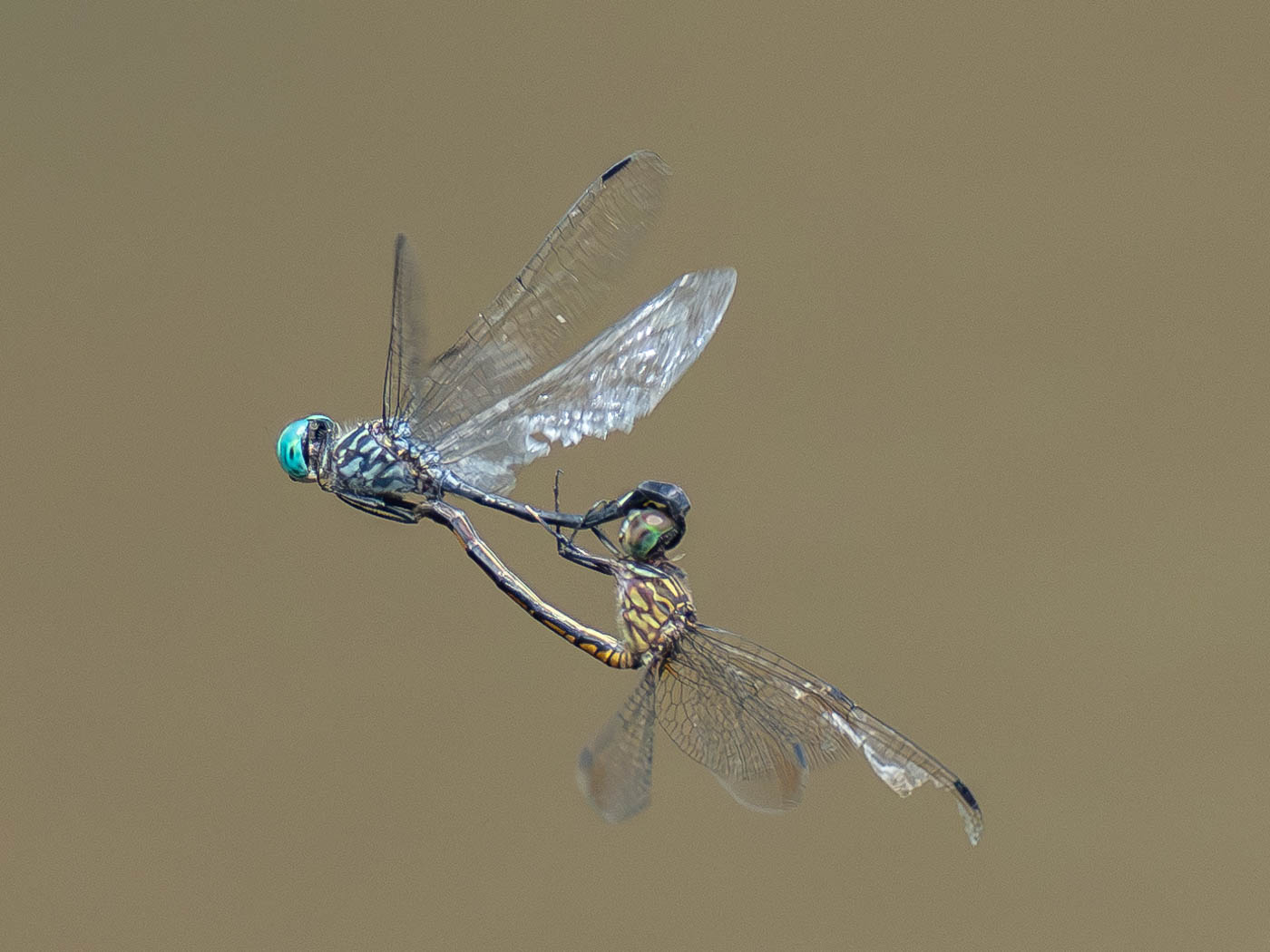
Returning, we bumped into our friendly local researcher again. This time he told Mr. Leader of a pond that was actually behind the main reserve, access to which required a circuitous trip along roads and down some lengthy gravel tracks. Following his instructions we duly found it and snapped away again for another 45 minutes or so beside the pool. In the muddy pool surroundings I was a bit hampered by my lack of Wellington boots – whilst mine had turned up with my repatriated luggage, I’d found them almost impossible to remove so I’ve returned to wearing my walking boots. Most photographic backgrounds have tended to be a confused tangle of vegetation but this pool provided a cleaner backdrop for a slightly distant in-flight shot of a mating pair of Dashers.
It was well into lunchtime by now and Herr German doesn’t do well without food – unless he’s photographing dragonflies, that is. He’s as fat as a thick chip but eats like a horse. After about 13:30 we managed to drag him away and opted for a cafeteria lunch of fried chicken and chips in the nearby town. A stray dog watched us, salivating (the dog that is, not us) as we ate. The chicken was surprisingly good and just to try to be healthier I avoided most of the papas [chips]. No, we didn’t feed the dog.
Appetites sated, except for the dog’s, of course, I guarded the car full of luggage while my companions raided another bakery to help Herr German fill any remaining gaps he might have in his stomach later that afternoon. There were bound to be some.
We hit the road again and drove along beside a novel landscape of endless pineapple plantations, all of which are American owned I believe, to get to our final destination of the day at Iguanitas Lodge in Boca Tapada. An iguanita is a small iguana. The afternoon rain was intermittent rather than an unending thrash. My room here is best described as adequate after the relative luxury of La Selva. Hot water seemed to be more or less non-existent but with the temperature topping 30°C, a cool shower was fine by me.
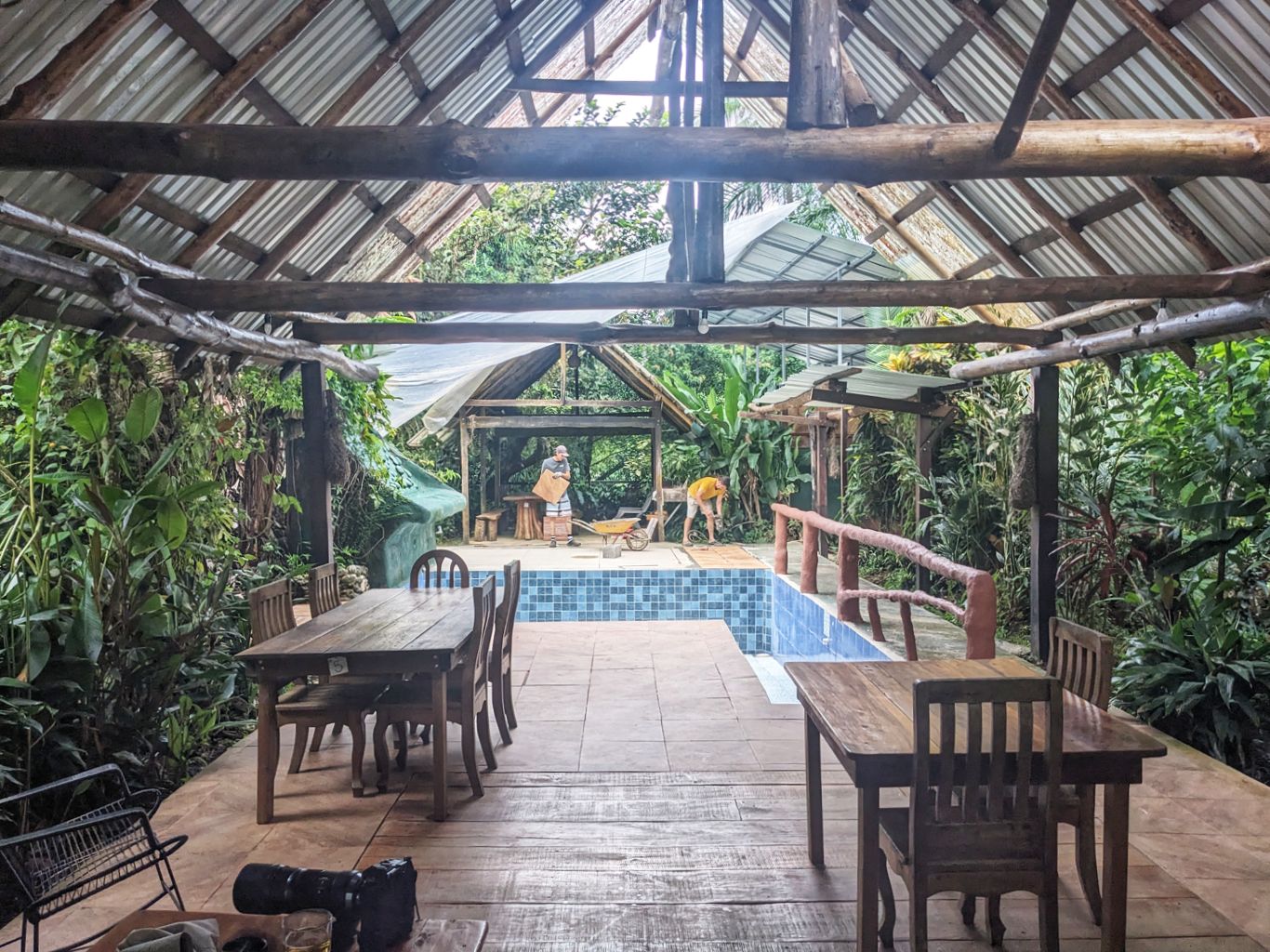
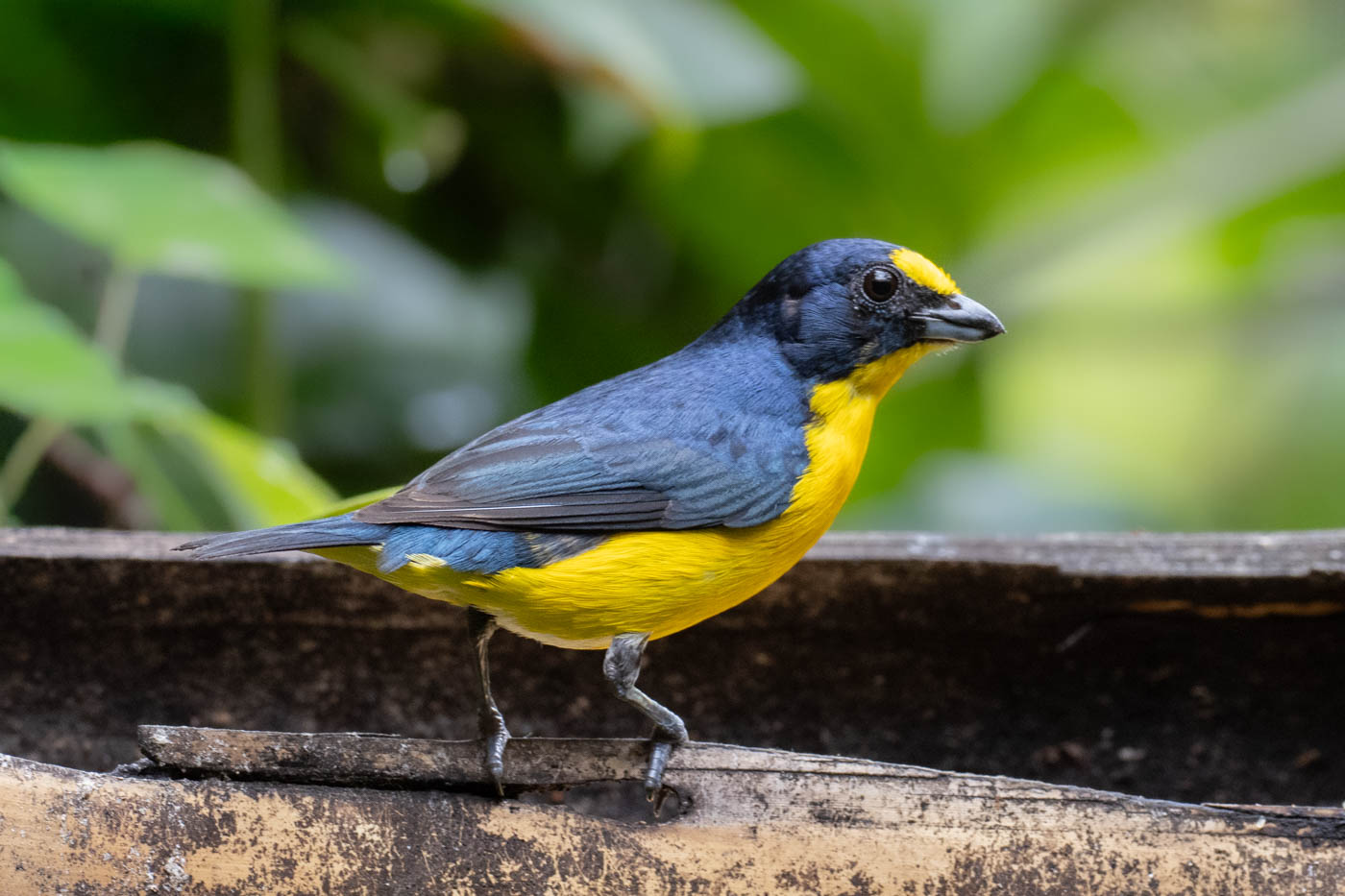 The Iguanitas Lodge eating area is covered against both the sun and the rain. It’s a pleasant enough space and kept me amused watching a procession of colourful birds visiting the owners’ garden while I dispatched a beer or three. You can’t keep beer cold travelling for an hour or two in a hot car but at least Iguanitas had its own supply for sale. The lodge puts unzipped bananas out in a sort of bamboo trough so it looks natural rather than like a bird feeder; clever. This garden visitor rejoices in the name of Yellow-throated Euphonia (Euphonia hirundinacea), which Google Lens helped me with. Google can come into its own with American fauna but, being US-centric, I find it’s best avoided for Europe.
Recent Comments